Throughout our tea series, we’ve covered a lot of ground- herbal infusions, loose leaf teas, different processing methods- but fellow tea fans may have noticed a conspicuous omission. This unmentioned tea has had steady market growth for years, once only popular in Japan and now sold at every Starbucks in the US. Its history bleeds into the modern-day as the harvesting, processing, and preparation differs from all other tea mentioned on this blog. It’s time to talk about that omission; it’s time to talk about matcha.
If you’ve ever ordered a matcha latte from your favorite coffee shop, you’ll have an idea of what I’m talking about: the bright green, frothy green tea drink that the barista may have used a funny-looking whisk to prepare. The whisk isn’t just to make foam; matcha is a powdered tea, tea leaves ground into fine dust, and powdered tea can’t be steeped. Matcha powder must be fully incorporated into the water and, for hundreds of years, that little whisk has been the gold standard for its preparation.
So why is matcha powdered? Why do we still use a bamboo whisk? What makes matcha so much different than loose leaf teas? To answer those questions we’ll need to take a small dive into tea history and take another look at how tea is processed.
When tea was first produced in China, it was sold in bricks or cakes. Those cakes would then be boiled in hot water with other food items such as ginger, salt, orange peels, or rice (like a soup!). In the Song Dynasty (960-1279) tea went through a small revolution- after many years of tea masters such as Lu Yu simplifying and perfecting the art of drinking tea (he got rid of all the soupy bits), tea was now ground into a fine powder and whipped into water. This practice was integrated into Buddhist rituals and spread across China as a way to aid in meditation. A visiting Japanese Buddhist priest, Eisai, found the rituals around whipped tea so great that he decided to bring the seeds of Camellia sinensis back to Japan’s temples. When the Mongols swept through China, the practice and tools of whipped tea were lost, but the practice continued to thrive in Japan.
Whipped tea took on the name “Matcha”, or “powdered tea” in Japanese, and spread through the temples and the upper classes of society. Matcha was served in opulent tea rooms for large parties among Japan’s respected leaders and warriors. One of these leaders, a respected daimyo (feudal lord) named Toyotomi Hideyoshi, employed the tea master Sen no Rikyu, one of the most influential tea masters of all time. Thanks to Sen no Rikyu, tea was taken back to its Buddhist roots, tea houses becoming small, humble affairs with a few honored guests. He created a style of tea ceremony, the wabi-cha, that became the basis for most tea ceremonies still held in Japan today. Many of the tools we use to prepare matcha now are the same, or heavily influenced by, the tools used by Sen no Rikyu hundreds of years ago.
The humbling and codification of the tea ceremony allowed it to spread, changing and expanding throughout the years. It is not only a Zen or Taoist practice anymore- the image of matcha turned into that of a medicinal drink, packed with antioxidants, which has kept it in vogue through the modern age. Matcha’s bright green powder now packs a caffeine punch in coffee and tea shops all over the world.
History is not the only reason matcha persists; the taste of matcha is wholly unique, having been perfected over hundreds of years in Japan. Matcha production is unlike loose leaf production, not just because of how it’s ground into powder, but how it’s grown.
As mentioned in a previous tea post, From Leaf to Cup: Part 2, changing the conditions in which Camellia sinensis grows can have a major effect on the overall flavor. When growing matcha, farmers will keep the tea plants shaded with tarps or large overhangs, keeping the amount of sun the plant receives low. This forces the plant to derive more nutrients from the ground, producing excess chlorophyll and caffeine. All those delicious tea juices I always mention? Shaded plants are packed with them thanks to weeks-long shading. The leaves are then picked and sent to dry.
The soon-to-be-matcha-leaves are dried with their leaves kept flat, letting them crumble as the moisture dissipates. The dried leaves are called tencha and are also used to create their own delicious tea. The leaves destined to become matcha are sent to the grinder- either an industrial grinder for lower-grade matcha (used for cooking, baking, or brewing with the intent of making lattes or mixed drinks) or a fine stone grinder for premium or ceremony grade matcha (used to drink on its own or in tea ceremonies). What’s left when the process is done is the fine, vibrant green tea powder that’s packed with caffeine and earthy goodness.
Matcha isn’t relegated only to coffee or tea shops- it’s easy to make at home! While there are several specialized tools that have been created for matcha in the last several hundred years, only one is required; the rest can be substituted so that you can enjoy the sensory, meditative process of matcha making at home. Let’s go over what you’ll need:
- A chasen: a bamboo whisk for making matcha.
- A chawan: a traditional Japanese tea bowl that is both deep and wide enough for the whisking motion to work.
- (Substitute with: A soup mug or a wide bowl.)
- A chasaku: a bamboo scoop for measuring matcha.
- (Substitute with: A teaspoon).
- A furui: a sifter for breaking up any clumps that have formed in the matcha.
- (Substitute with: anything food-safe with tight mesh.)
- (Optional): A chasen kusenaoshi: a chasen holder that’s shaped to keep the tines of the chasen in shape as it dries. This is a great preventative tool to keep your chasen from breaking!
- (Optional): A chakin: a tea cloth to wipe all your tools down with.
Once you’ve gathered your tools, it’s time to make some matcha!
Step One: Warm the Water
The ideal temperature for matcha is somewhere between 158°-176°F (70°- 80°C). You can use a temperature control kettle, heat water on the stove and check periodically with a food-safe thermometer, or boil water and then let sit for 7 to 10 minutes. Make sure the water you use isn’t too hot or the matcha will be bitter.
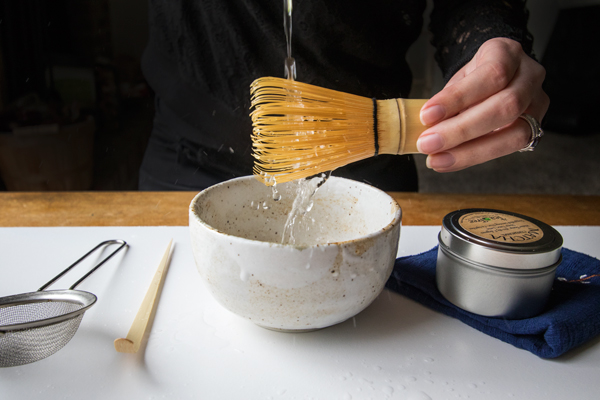
(Optional) Step One and a Half: Warm the Tools
This step isn’t necessary but is a preventative step, much like owning a chasen holder. Soak or pour warm water over the chasen to loosen the chasen tines, making them more flexible during whisking. Stiff tines lead to breakage! I like to pour water over my chasen and then allow it to sit in the chawan while I wait for the water to meet the correct temperature. After a few minutes have passed, empty the water and wipe your chawan dry.

Step Two: Measure and Sift Your Matcha
Scoop 1 teaspoon of matcha into your sifter (if you’re using your chasaku, two heaping scoops = 1 teaspoon). Sift the matcha over the chawan, gently smoothing out clumps using your spoon or chasaku. Keep in mind: this matcha should be either ungraded (low-grade), premium, or ceremonial matcha. Don’t use culinary matcha for drinks! (Bleh!)
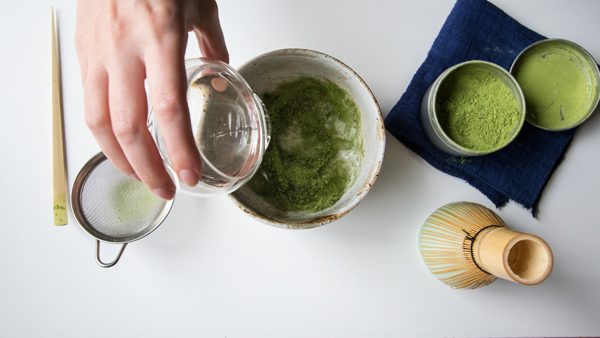
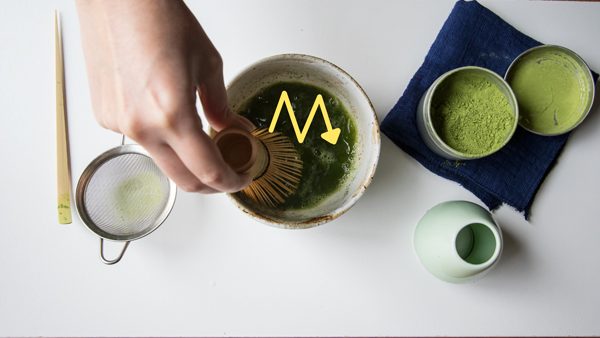
Step Four: Pour and Whisk
Pour a small amount of water into the chawan (no more than 2 or 3 ounces). It’s time to bring out the chasen! Whisk the tea into the water using “M” or “W” motions keeping your motions quick and light. Don’t push the tines against the bottom of the chawan- better to keep the tines nearer to the surface so that they can bring air into the water, creating a lovely froth.
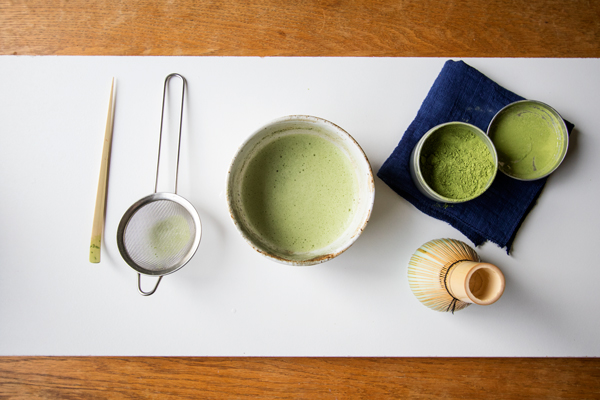
Step Five: Enjoy!
Once the entire surface of the tea is bubbly, your matcha is good to go! If you have premium or ceremonial grade matcha, add water to fill your chawan or cup and drink plain for the best intended experience. If you have a lower grade matcha feel free to mix with milk, honey, or other sweeteners to make your favorite matcha experience! Enjoy your delicious green tea.
The sources I used for this post are below:
Kakuzo Okakura, The Book of Tea (available to read for free on Project Gutenberg)
Kevin Gascoyne, Francois Marchand, Jasmin Desharnais and Hugo Americi, Tea: History, Terroirs, Varieties, First Edition (While the first edition is no longer for sale, updated editions may be found at your local bookstore or places like Barnes & Noble)
 Tea Reads
This is pretty interesting. As someone who just wants to get things done, having to go through a ritual for one drink really does put me off matcha, as much as I may enjoy the process.
But I’ve been getting into green tea lately, mostly because it’s milder than coffee, and it tastes better than black tea. So perhaps matcha is on my list. And thanks to you for all this information!
LikeLiked by 1 person
I totally understand the reservation towards matcha- I mean, heck, look at all the setup it requires! Even as someone who enjoys the process of brewing tea, matcha is very much a Once A Week drink for me.
As a heads up if you ever do give it a shot, matcha does have the highest caffeine content of pretty much any tea. It’s a much higher leaf to water ratio than regular, steeped whole leaf tea or tea bags! Should you ever want some green tea or tasty lower-caf tea recs feel free to reach out 🙂 Thanks so much for reading!
LikeLike