If you were born and raised in a country proliferated by tea bags, your introduction to gongfu brewing might have looked similar to mine. There I was, scrolling Instagram tea blogs and looking at pretty tea cups when, suddenly, I’d see a disembodied hand pouring tea out of strange vessels with unsecured lids. After seeing these hands one too many times, I began researching what the heck I was looking at. What I found was a new way of experiencing tea, one that was the polar opposite of everything I’d done before. I’d found the practice of gongfu cha.
“Gongfu” is the same root word as “Kung fu”, an appropriated Mandarin word that has become a word for a martial art here in the States. Directly translated, the actual word “Gongfu”/”Kungfu” means “effort” and can be ascribed to any skill, practice, or study that requires effort to learn. When adding the word for tea, “cha”, afterward, the phrase roughly translates to “preparing tea with skill”. The practice of gongfu cha originates in the traditional Chinese tea ceremony, a ceremony whose practices and principles have given us the more free-form definition we have today. Today’s definition of gongfu cha, at least in the west, is any time you brew tea in a small vessel with a high leaf-to-water ratio and prepare it in several short successive steeps.
The idea of drinking tea over many steeps, most of them under a minute or two, will seem strange to those who grew up brewing western style. While brewing one large pot for several minutes does have merits– the strong flavors produced, the ability to make a cup for everyone in the family– gongfu cha brings something different to the table. Instead of a quick, economical social or “wake-me-up” brew, gongfu cha asks us to make time for the tea. Steeping multiple times forces us to sit down and experience the tea, noting how it grows with each consecutive infusion. The leaves unfurl. The flavors shift. The aroma and color change as the leaves release more and more of their deliciousness into your cup. Gongfu cha is about seeing how tea evolves, from its first breath of water to its last spent leaf.
While gongfu cha can involve any tea, there are subsets of teas that do better with it than others. White teas and green teas, often more delicate in flavor than other types of tea, will come in strong during the first part of a gongfu session, but quickly hit their crescendo and peter out by steep number ten. The darker teas, like oolongs, blacks, and puers (shou or sheng), tend to last much longer, sometimes going twenty or more steeps, making sessions last so long that you have to leave and come back to it hours later. These long-lasting teas are often preferred during gongfu cha than greens or whites.
If you’ve never brewed gongfu cha style before, I recommend starting with an oolong. The leaves are often rolled, which adds a great layer of visual enrichment as, with each steep, the leaves open. It also lends itself to about an hour- to hour-and-a-half-long session before the leaves are spent. This gives you a taste of what gongfu cha is all about without forcing you into a marathon session with a complex shou puer.
Once you’ve chosen your tea, there are a few items you need for a traditional gongfu cha setup. If you’re a beginner and don’t have money to drop on some new brewing items, have no fear– I’ve provided substitutions for each required item that you can find at home.
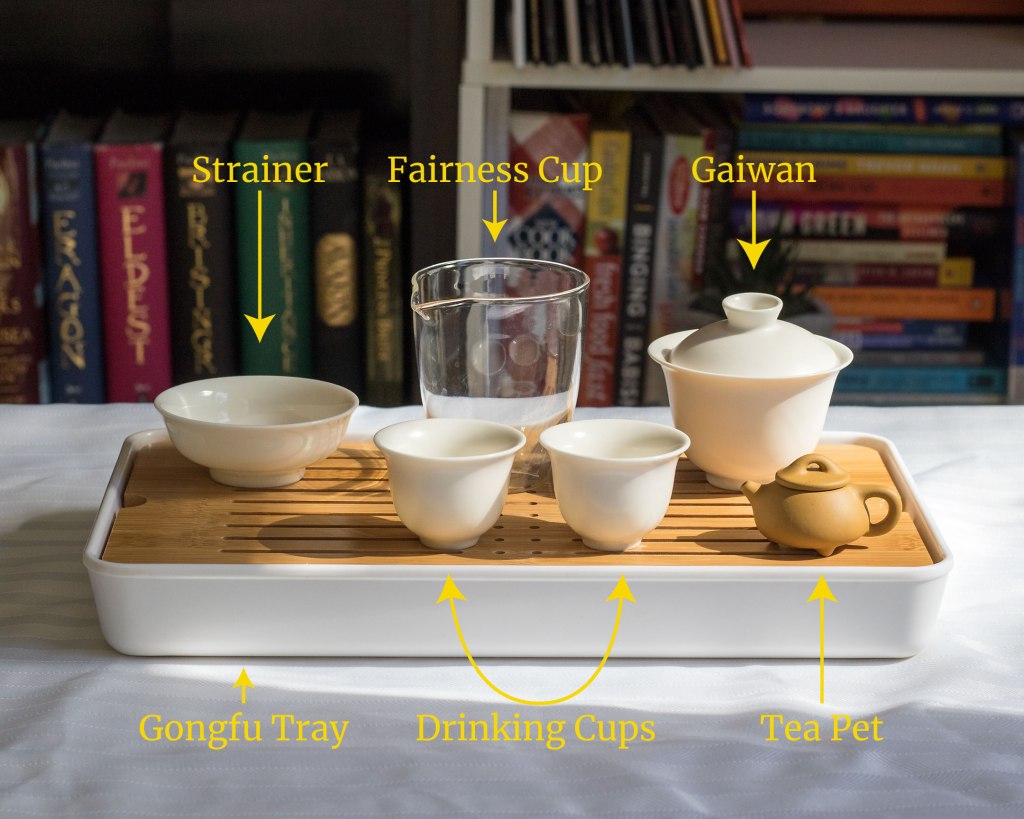
- Gaiwan or Gongfu cha teapot: Both traditional brewing vessels used in gongfu cha, the gaiwan is a lidded cup, usually with a saucer, and the teapot is a sized-down, smaller teapot. The vessels are small on purpose to facilitate the higher leaf-to-water ratio. Gaiwans are often porcelain or earthenware. Teapots can be of many materials, the most traditional being Yixing clay.
- (Substitute with: A mug or cup with a slotted spoon or spatula to hold back the leaves.)
- Gongfu tea cups: Two different cups can be used during gongfu cha– aroma cups and drinking cups. Aroma cups are tall and aerate the tea as it’s poured to enhance the tea’s fragrance. The drinking cups are shorter and wider for easy sipping.
- (Substitute drinking cups with: A smaller cup than your brewing cup.)
- Gongfu Tray: Gongfu cha, especially when you’re learning, is pretty messy. Gaiwans and teapots don’t always have perfect pours, and you don’t always have great aim. Having a tray, especially one that provides some sort of drainage, keeps you from staining your furniture or constantly cleaning.
- (Substitute with: a towel. Maybe several.)
- Fairness cup: Also called a chahai, the fairness cup is optional for solo sessions but mandatory for sessions with family or friends. Instead of pouring tea directly into your and your guest’s cups, pour the entirety of the tea into the fairness cup first to ensure everyone at the session gets tea of the same flavor.
- (Substitute with: You guessed it, another cup.)
- Timer: Steeping several times with progressively longer steep times is not an innate ability. A timer on your phone, watch, or even a kitchen appliance can help you when “1 Mississippi, 2 Mississippi” doesn’t cut it.
- (Optional) Strainer: The lid of your gaiwan or teapot filter will only catch the larger leaves. Add a strainer over your fairness cup or drinking cups as an extra step to keep small leaf bits and detritus out of your tea.
- (Optional) Tea Pet: Tea pets are fun additions to any gongfu cha practice. Made of Yixing clay and formed into animals, humans, or any other fun objects, these figurines sit on your tray and enjoy your first rinse and any tea you’d like to offer them. A well-loved tea pet will develop a patina and a personality.
Once you’ve gathered your items and your favorite tea, it’s time to sit down for a gongfu cha session!
(Optional) Step Zero: Warm Your Vessels
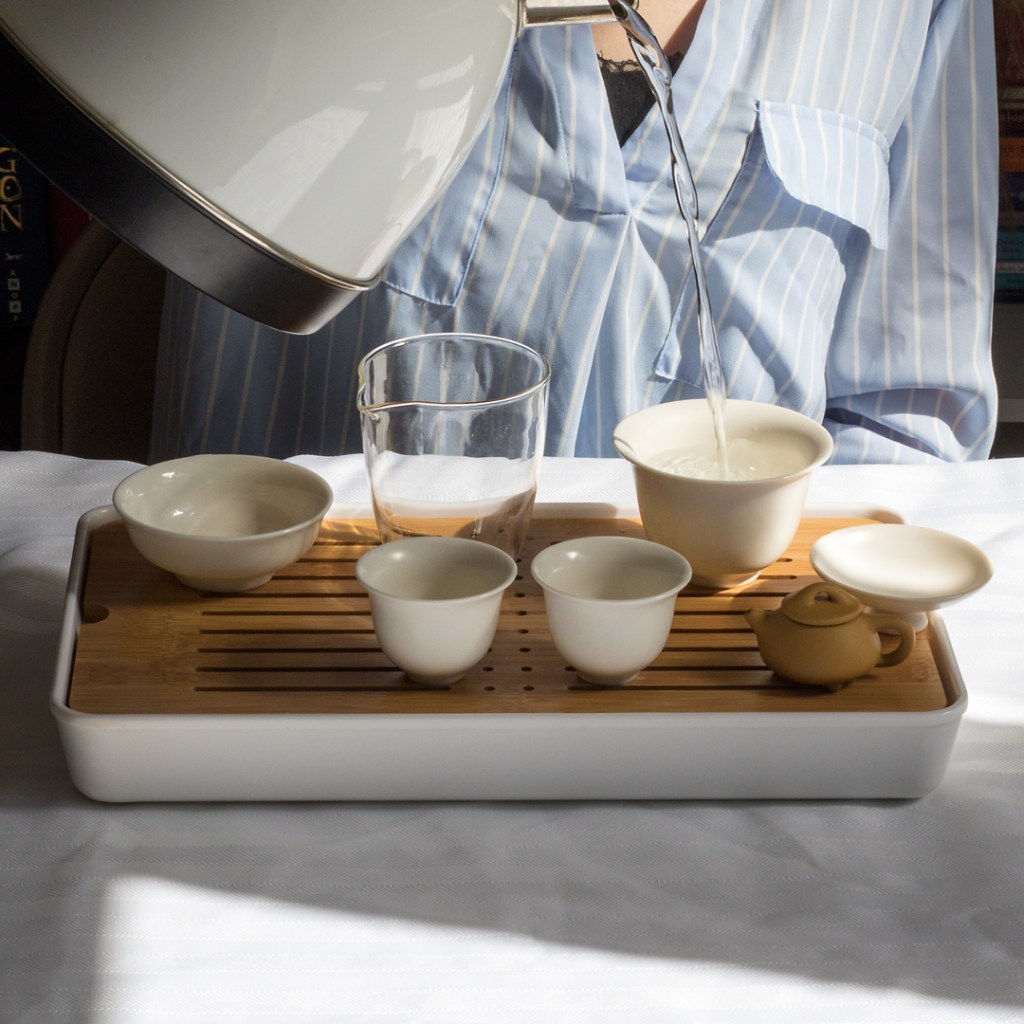
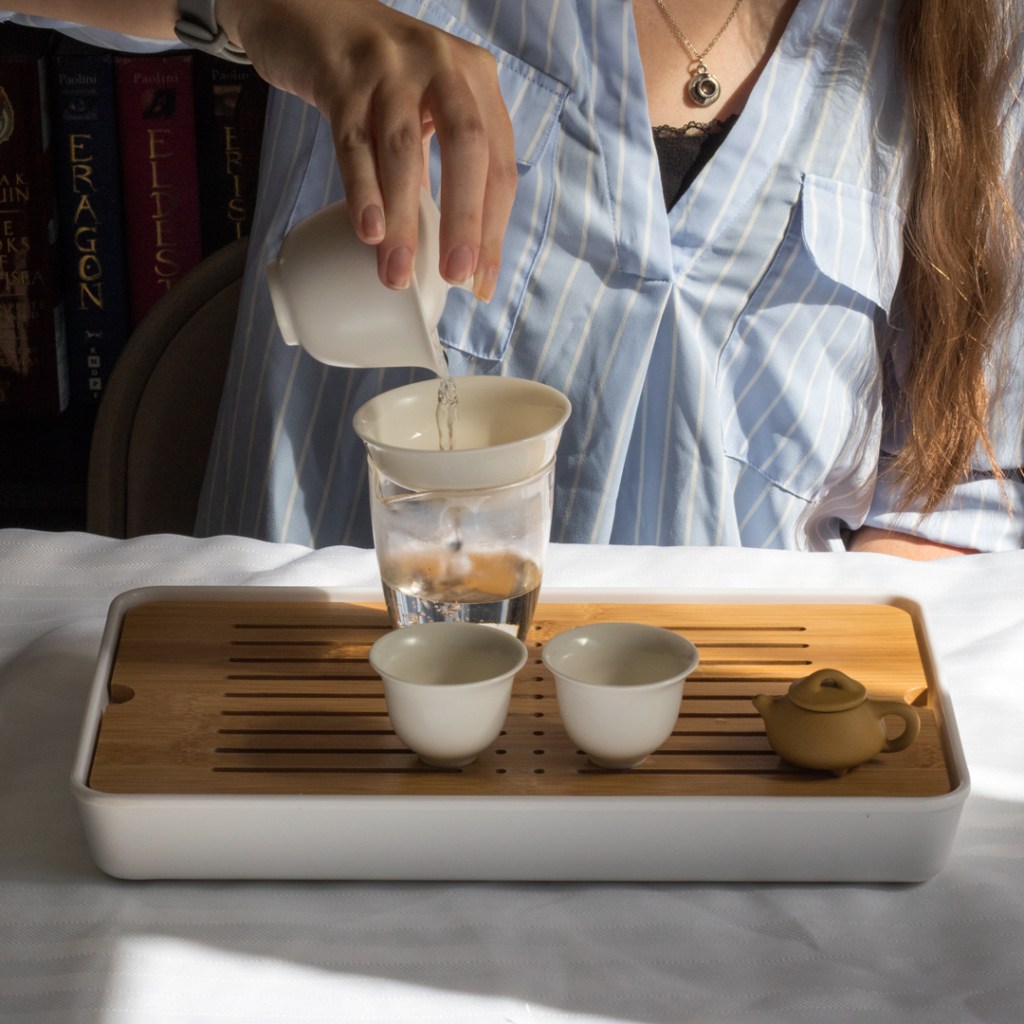
While not necessary, I recommend warming your brewing and drinking vessels before starting. This gives you a bit more temperature control and consistency during the session. To warm your vessels, pour water that’s been heated to the correct temperature for your tea into your gaiwan. Proceed to pour through the rest of your vessels like your fairness cup and aroma/drinking cups. Pour the last of the water over your tea pet, into your tray, or down the sink.
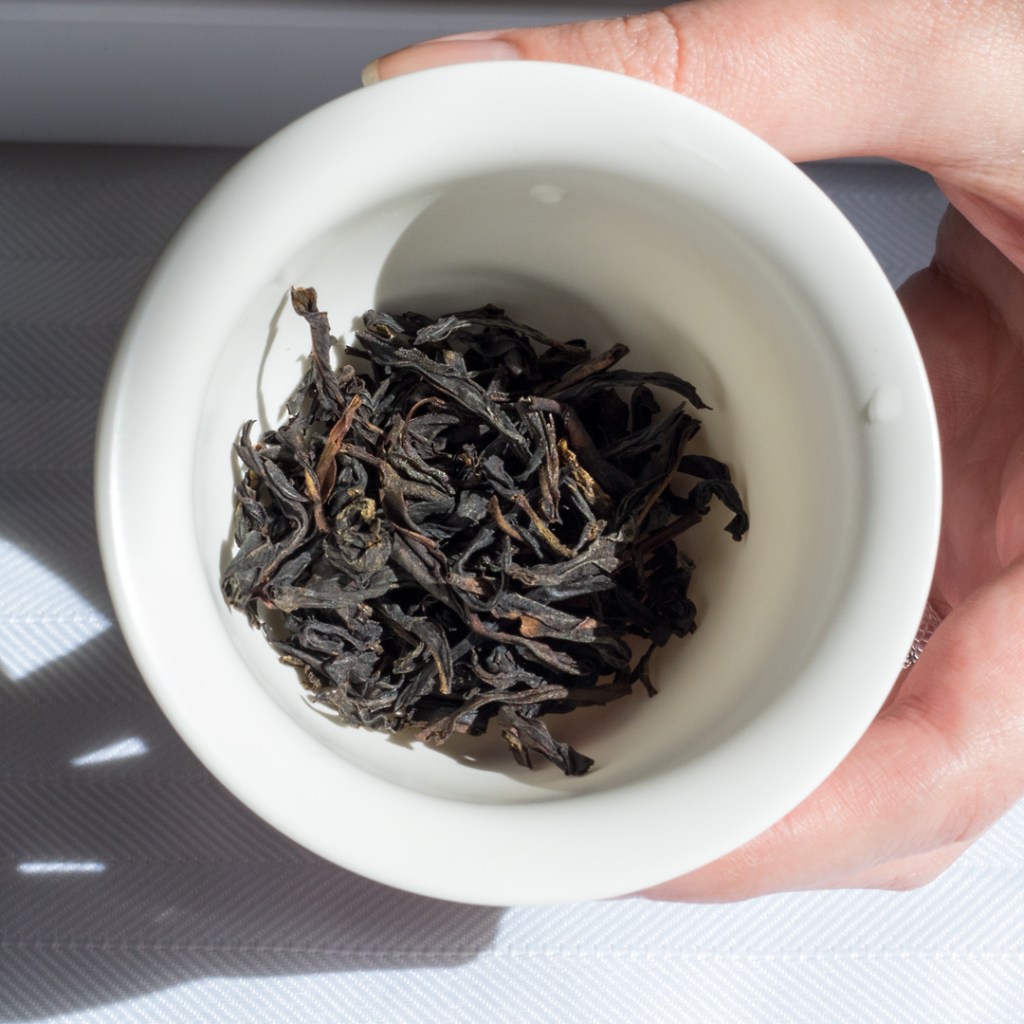
Step 1: Insert Your Tea Leaves
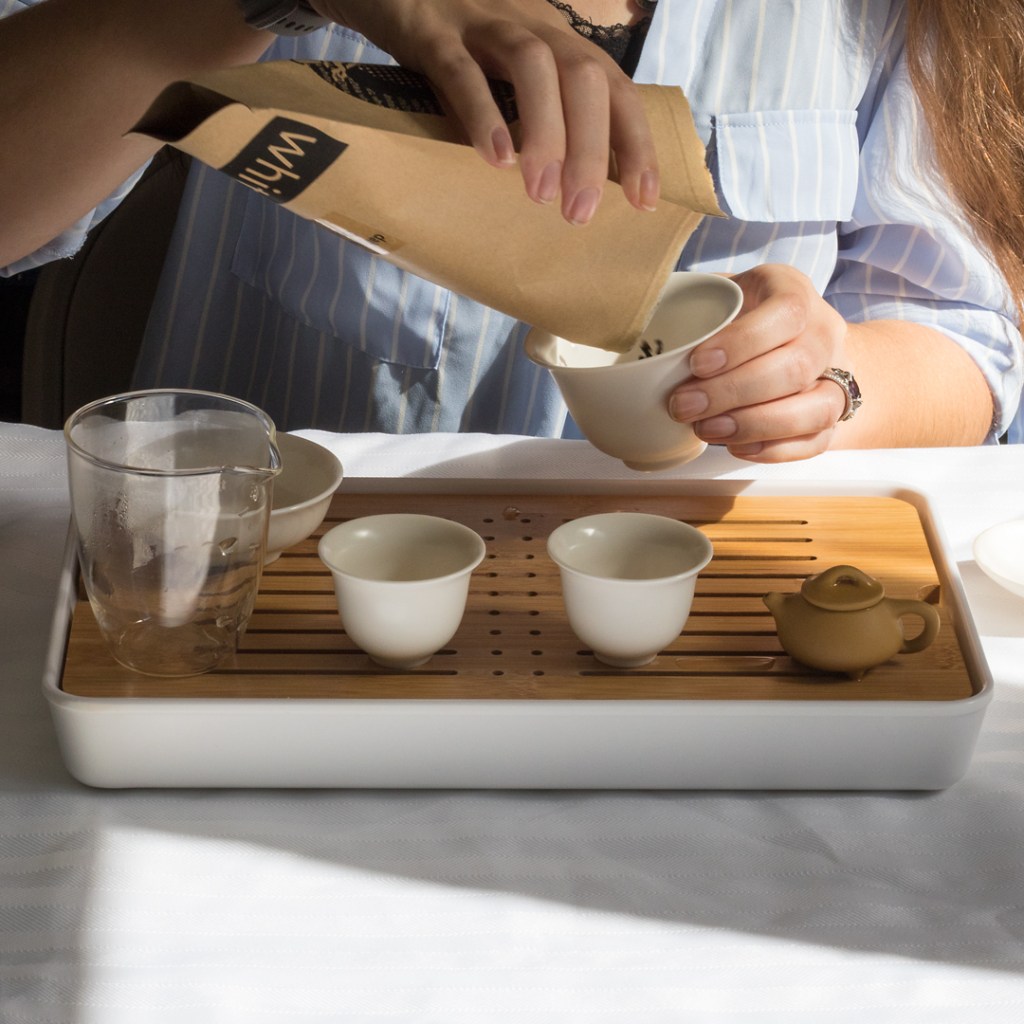
If the tea company has given instructions for leaf-to-water ratios, follow them and insert the recommended amount of leaf into the gaiwan. If you have no ratios to follow, start with 5 grams or, if you’re a visual person like me, fill the gaiwan with dry leaf until you can’t see the bottom of your vessel anymore. The more tea you put in, the stronger your brew will be.
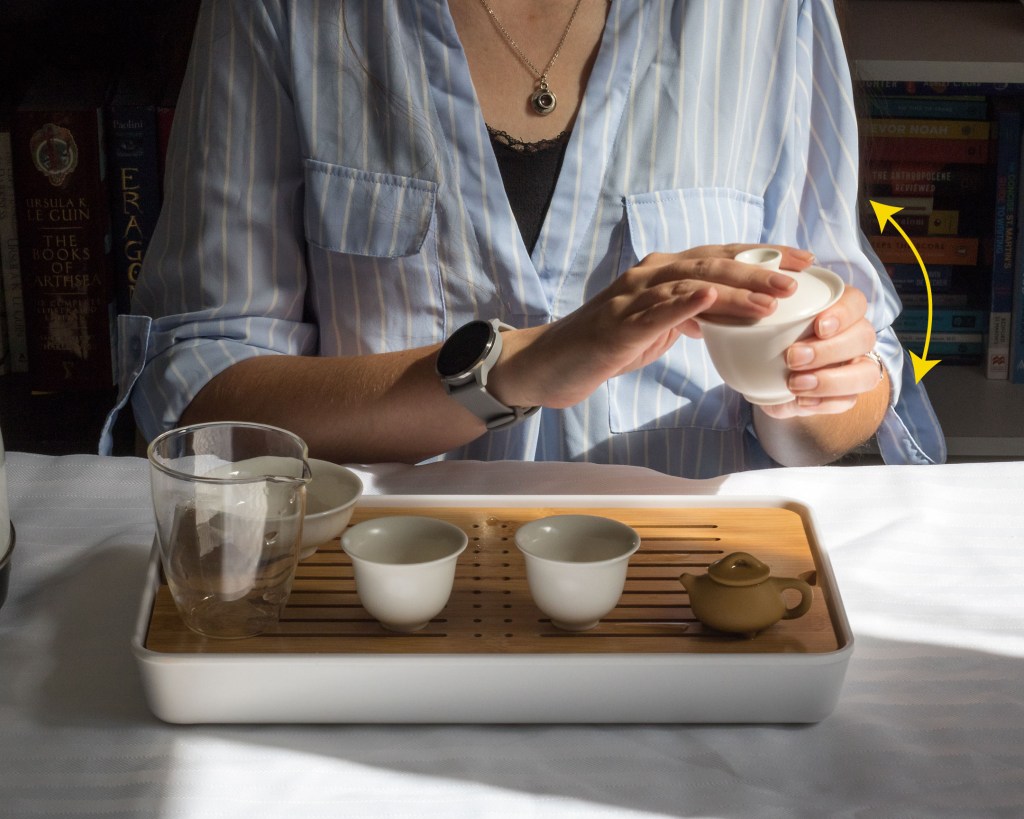
(Optional) Step 1.5: Give It a Shake
Holding the lid secure on your gaiwan, give the leaves a shake. The leftover moisture and warmth from when you heated the gaiwan with water will “wake up” the leaves. When you open the lid, give both the leaves and the lid a whiff. You should get a strong aroma to enjoy and maybe a hint of what’s to come.

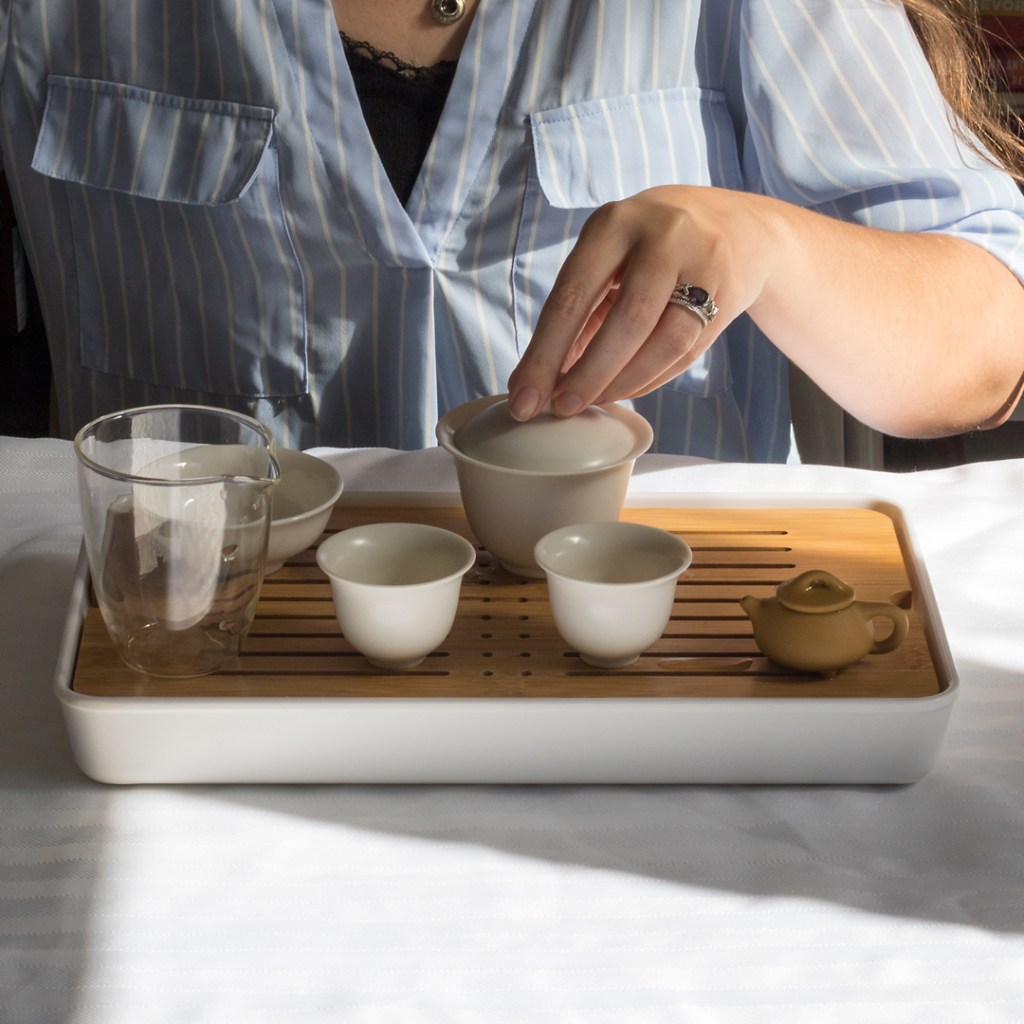
Step 2: Pour Water Into Your Gaiwan and Close the Lid
Again, the temperature should be what the tea company has recommended for the best flavor. Pour the water slowly around the edges of the gaiwan so that the leaves don’t all get wet at once. Closing the lid keeps the temperature consistent and allows the steam to bounce around, getting all the leaves that didn’t get hit by the initial pour soaked.
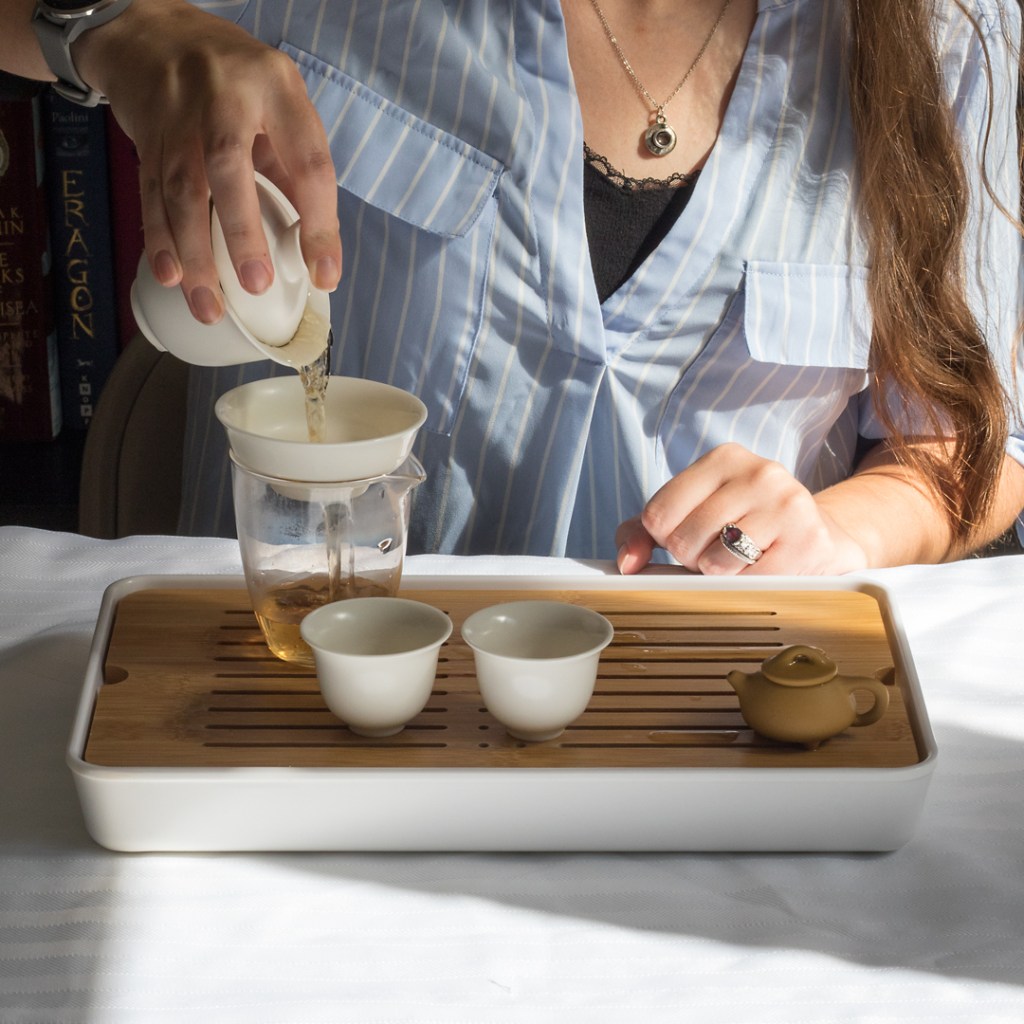

Step 3: Steep for 5 to 10 Seconds. Pour.
This first steep, called the rinse, is to “wake up” the leaves and remove any broken bits of leaf or stem that may be floating around in the cup. Opinions are divided on what you do with the rinse. Some pour it onto their tea pet to let their pal have the first taste; others dump it into their tray; some drink it. I fall into the first and third camps depending on the day, but gongfu cha is open to interpretation. Do what you like.
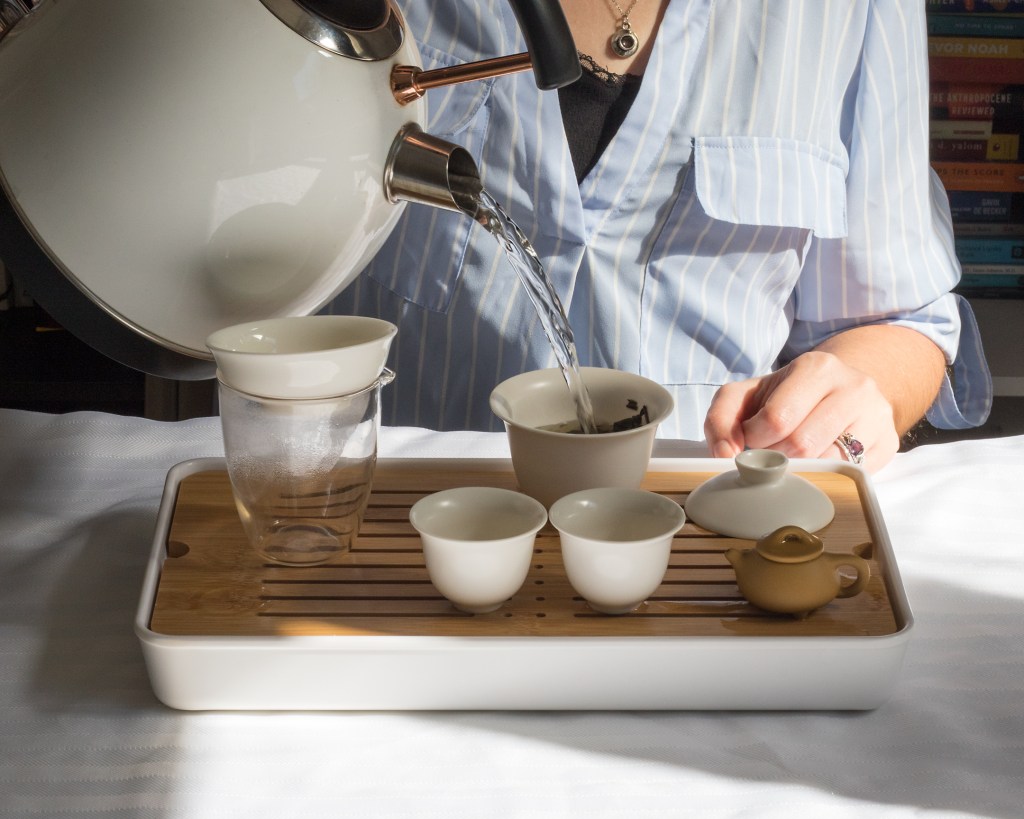
Step 4: Pour Water Into Your Gaiwan. Steep for 10 to 30 Seconds.
The second steep is considered the first “real” steep. If your tea company has suggestions for what time to start this “first” steep, follow their recommendation. If not, I’ve found that somewhere between 20 and 30 seconds is a decent starting point. Use a timer of some sort to help you keep track.
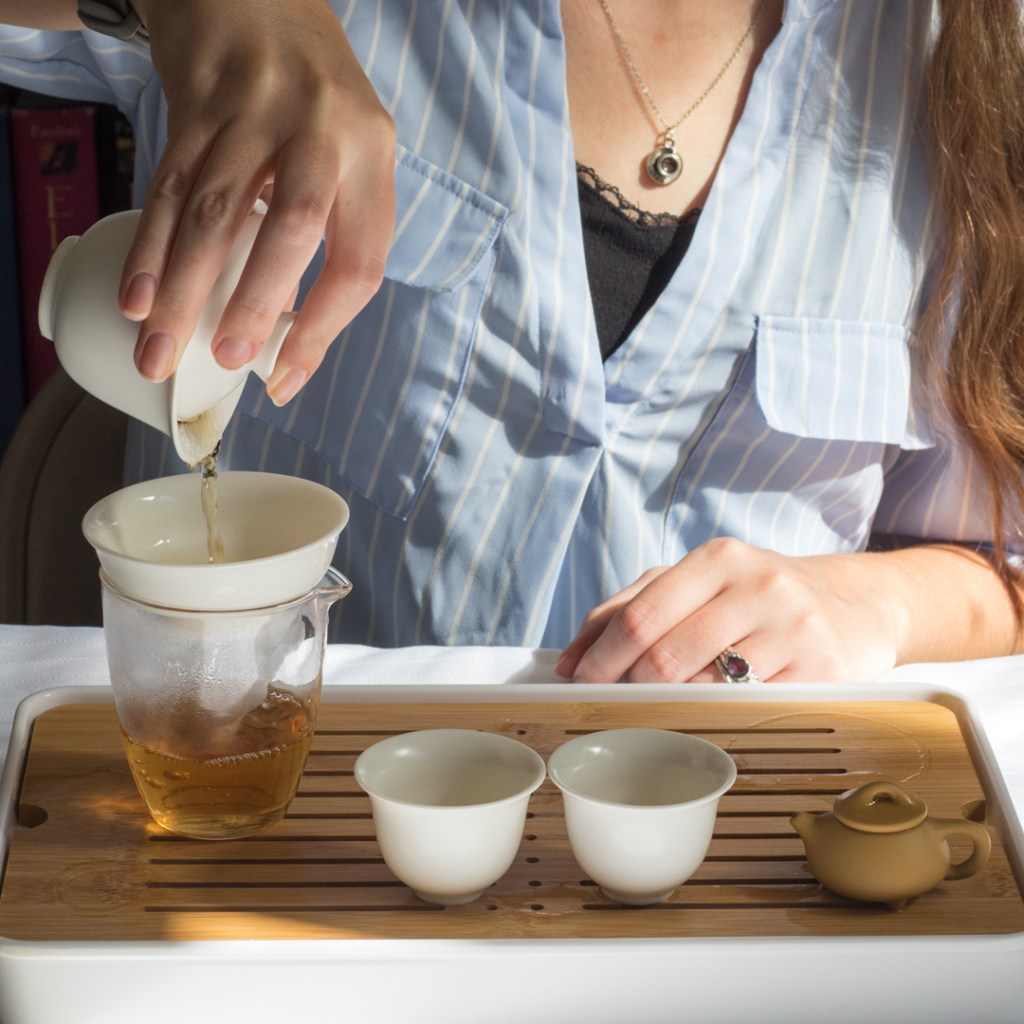
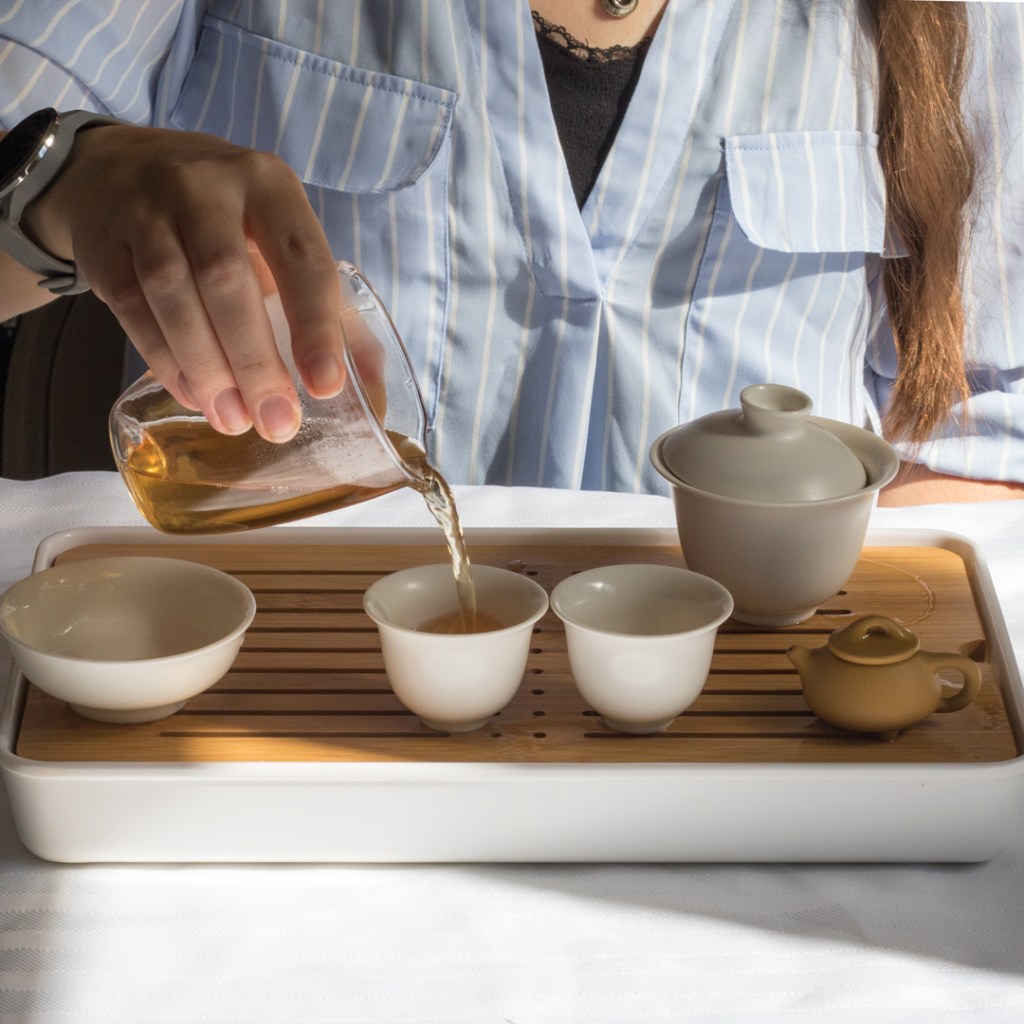
Step 5: Pour Your Tea
If you’re sharing a session with a loved one, pour the steep into the fairness cup. Flying solo? Feel free to pour into whatever cup you like (though the aroma cups would be hard to do well). As the tea leaves unfurl, more leaf bits will come out of your gaiwan, so if you’re not a fan of those, put your strainer over whatever cup you pour into. The order of cups typically goes: Fairness Cup -> Aroma Cup -> Drinking Cup. Skip whichever you’re not using.
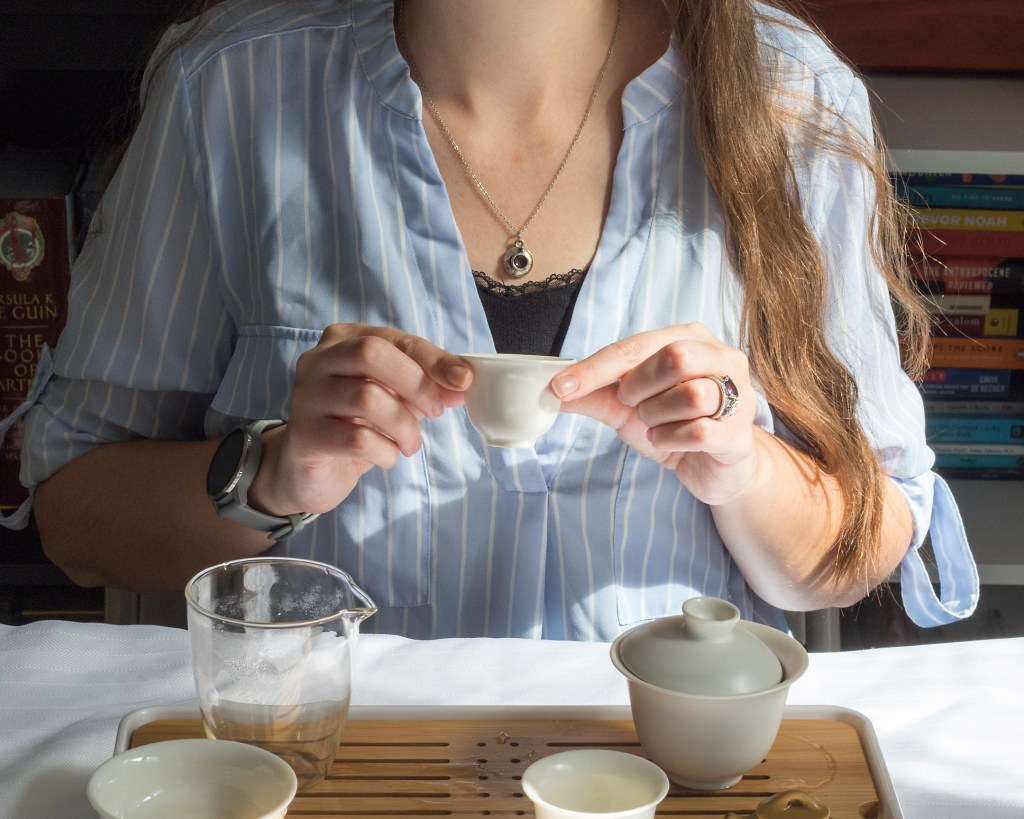
Step 6: Enjoy the First Sip
The first sip of a gongfu cha session is your introduction to a tea. Say hi. Chat about the weather. Get to know that first taste by smelling, slurping, and sipping. If you like note-taking, bring out a pen and piece of paper and note all the aromas and flavors you taste.
Step 7: Repeat Steps 4-6 Several Times, Adding 5 to 7 Seconds to Each Steep
As you steep for longer and longer, your tea’s flavor will shift and evolve. There are no rules beyond this point. Steep as many times as you like for however long you like, so long as there is a steady progression.
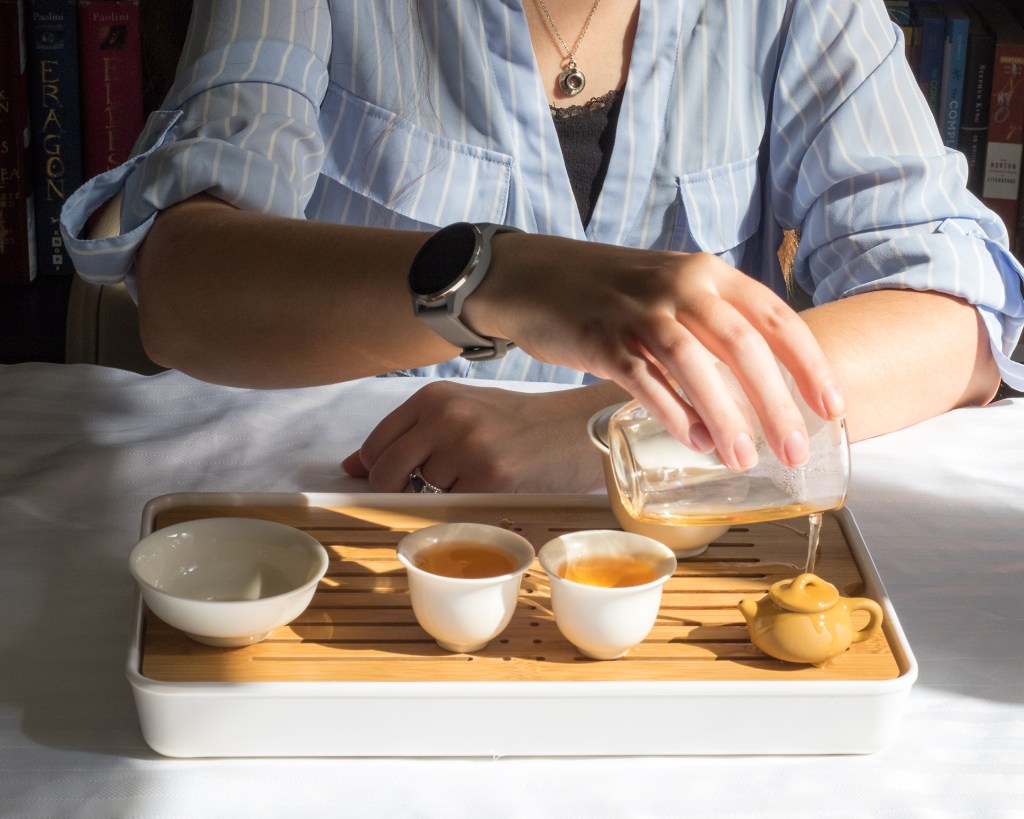
Step 8: Enjoy Your Session
Continue until your leaves begin to lose flavor. If the flavor isn’t flagging after 10 or 15 steeps, nothing is stopping you from pausing the session and coming back later. The one recommendation I have is to not let leaves sit overnight. Your session the next morning will be less than pleasant. Instead, if your leaves still have flavor but you run out of time, consider cold brewing them overnight. No matter what you choose, you’ll have had a productive and delicious session. Happy brewing!
 Tea Reads