One dollar.
I’d like you to think of the last time you bought something for a dollar. It might be hard to do. As you wrack your brain, you might think of the last time you went to a vending machine. No dice. A bag of chips, the weight of which is half air, costs a buck twenty-five. A candy bar, a buck fifty. Even dollar stores are busts, rarely having anything worthwhile for under five. The most recent one-dollar purchase I remember is my partner throwing a dollar’s worth of tokens into a claw machine to try and win me a stuffed animal. We didn’t walk away winners, but it didn’t matter. It was a dollar.
So imagine my surprise at seeing a full tea subscription box listed for a single dollar.
It was Black Friday and, admittedly, I was scrolling quickly. Being on social media around that time is like being a fish surrounded by fish hooks. Every business wants to lure me with percentages off and freebies, but they can’t nab me if I don’t read them. It’s the only way I’m able to stay sane during sale seasons. Still, I skim. And then, there it was, the bait that caught my eye. It glinted in the light and said, “One Dollar Nepal Teas Subscription Box”.
I stopped. Read. Bit my lip. Hemmed and hawed. Yes, over a dollar. No, I am not kidding. Then, with some eye-rolling from my partner, it was ordered. It was the one hook I nibbled at the entire sale season, and I considered that itself a win. All that was left was to wait and see what my one dollar had bought me.
A week later, I brought the Nepal Teas box off the porch. It was bigger than I’d expected. Weighty. I called my partner over and we opened our one-dollar mystery box together. Our chatter and laughing stopped when I opened the box to find not just one tea sampler, but two, both in sustainable and reusable packaging and stuffed alongside other goodies and pamphlets. “Oh,” we both said as we unpacked the 80 grams of tea, “This is a lot.”
So much, in fact, that I didn’t get to taste it during the holiday season. I hung the little string of flags they’d sent up on my bookshelf and put the tea away for a later date. It wasn’t until the start of the new year did I have a chance to dive in and get to know the two generous helpings of tea Nepal Teas had sent.
Kumari Gold
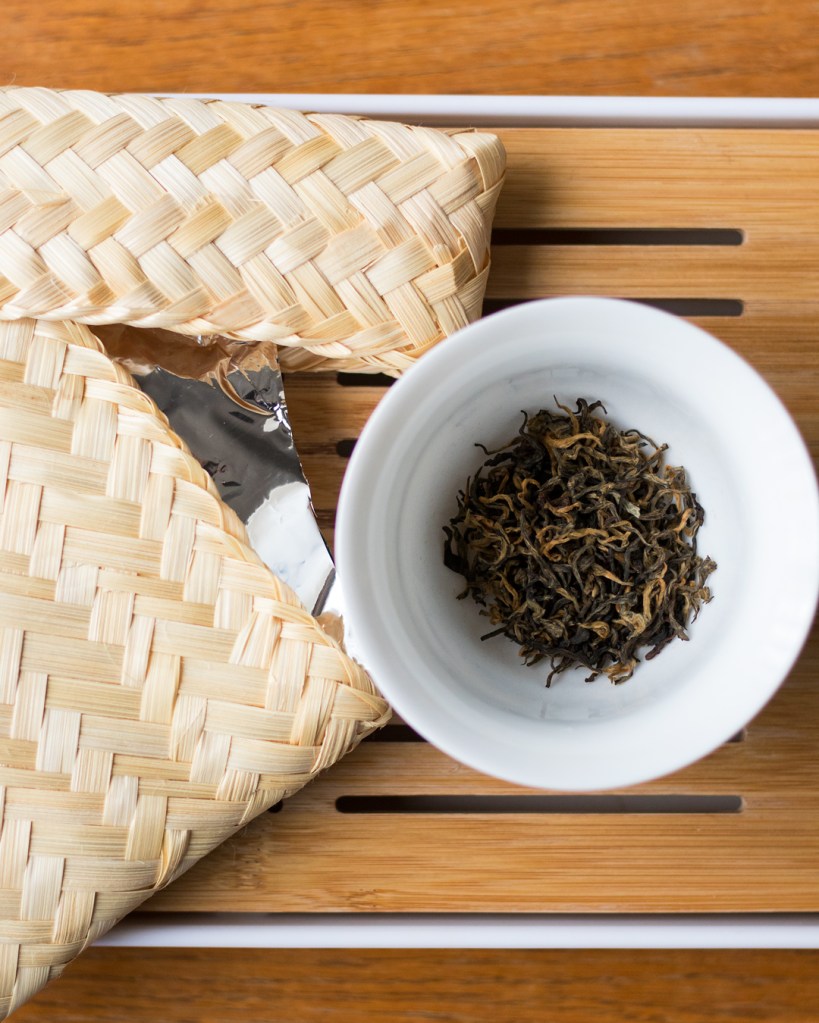
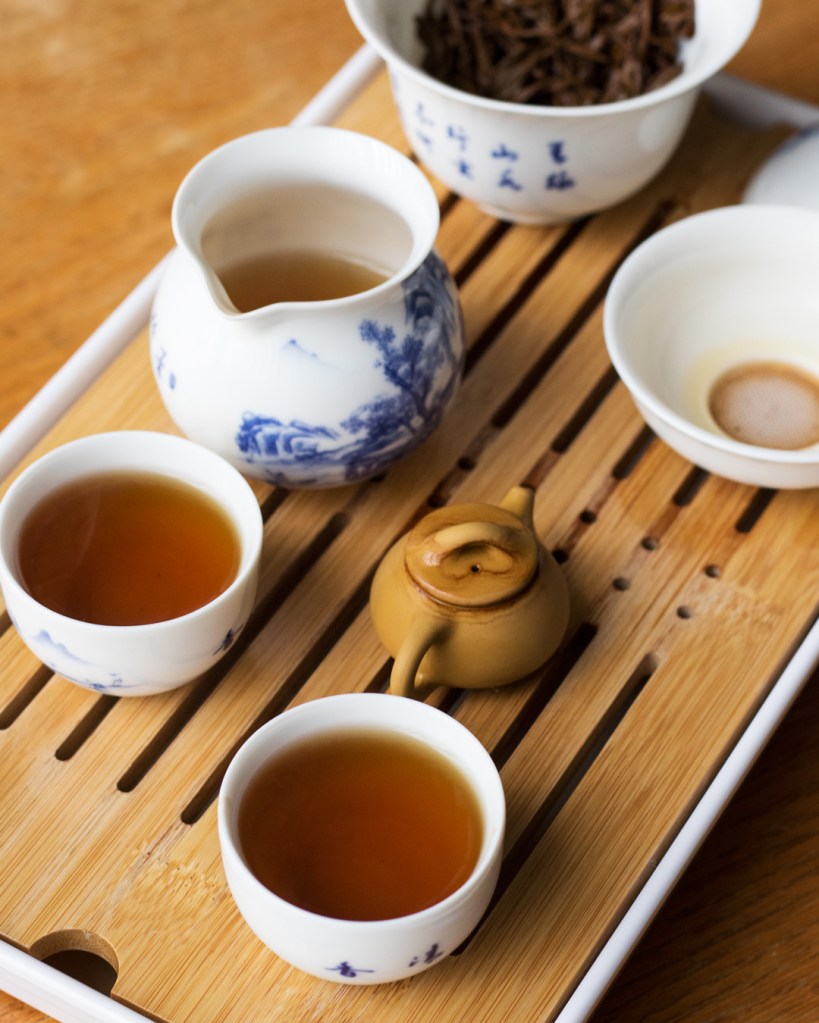
Kumari Gold is one of Nepal Tea’s award-winning black teas, grown in the foothills of Mt. Kanchanjungha. The tea estate was established by the founder’s family back in the late seventies, with his mother planting their first tea bushes in their backyard. The name “Kumari Gold” pulls double duty, Kumari being both the name of the living Goddess of Nepal and his mother’s middle name. It’s a sweet touch of character to a sweet tea.
“Sweet” isn’t just an emotional descriptor, in this case. The aroma that wafts from the dry leaf is warm, and the twisted, gold-tipped leaves unfurl in the water to produce what can only be described as a warm hug from someone you love very dearly distilled in your cup. The liquor is a round, velvety sweet, like honey you buy from a local beekeeper or warm maple syrup sitting on the front of your tongue. There is a mild woody taste at the back of the throat, becoming more pronounced as the steeps progress. It’s not unpleasant, though. On the contrary, it balances out the initial sweetness nicely and gives the tea a chance to evolve.
As denoted by the pictures and the descriptors, I brewed this tea gongfu style, using about 4 grams per 5 oz of water. I highly recommend the experience. I kept the water right under boiling and started at about 30 seconds, and moved up from there. My session ended after about twelve steeps (I lost track, as I often do with good tea), but the flavor had not completely left by the time I stopped. My limiting factor was actually the caffeine content, which, in this case, is relatively high.
To ensure I had not missed any of the essential experience, I also brewed Kumari Gold according to the directions given. Nepal Teas recommends 2 grams per 8 oz of water at 210°F and steeping for five minutes. While still good, I found the resulting brews didn’t live up to the gongfu experience, mostly due to the different water-to-leaf ratio. This is definitely a personal preference. Your mileage may vary.
Brewing recommendation: Brew outdoors as the sun rises. The air around you should be cold enough for a sweater but not so cold that you need a coat. Breathe in the aroma and steam as the dew glistens in the yellowing sky and find an energized calm for the day ahead.
Spring Oolong
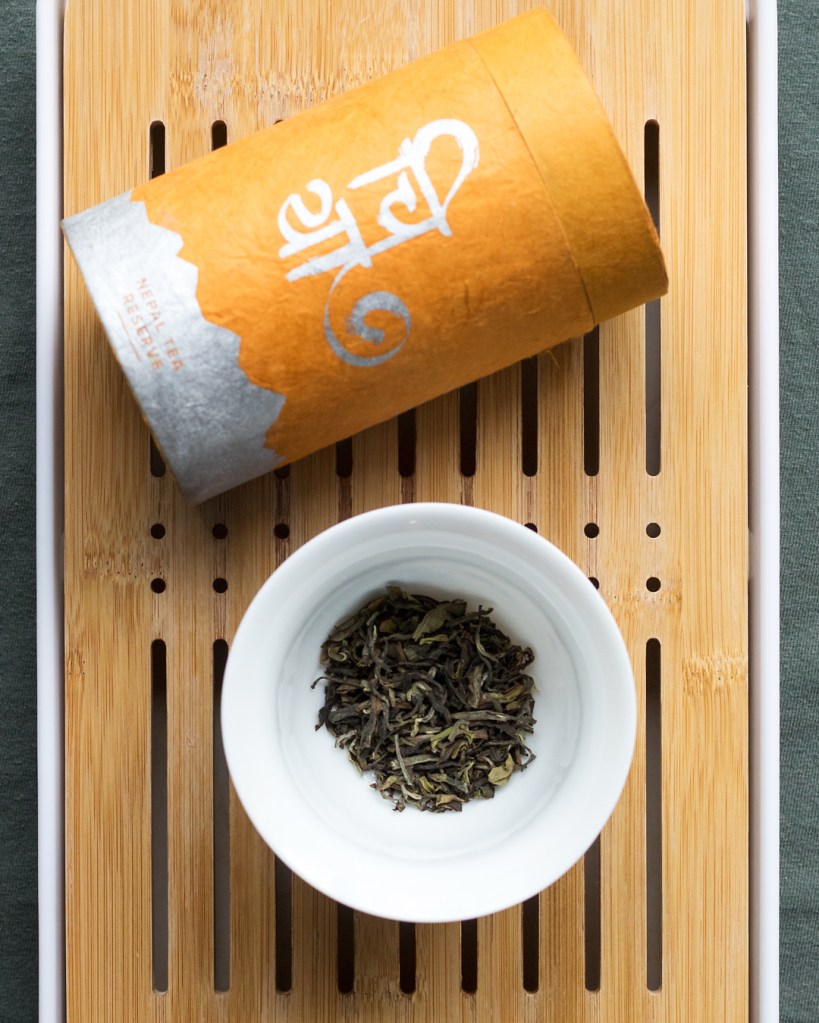
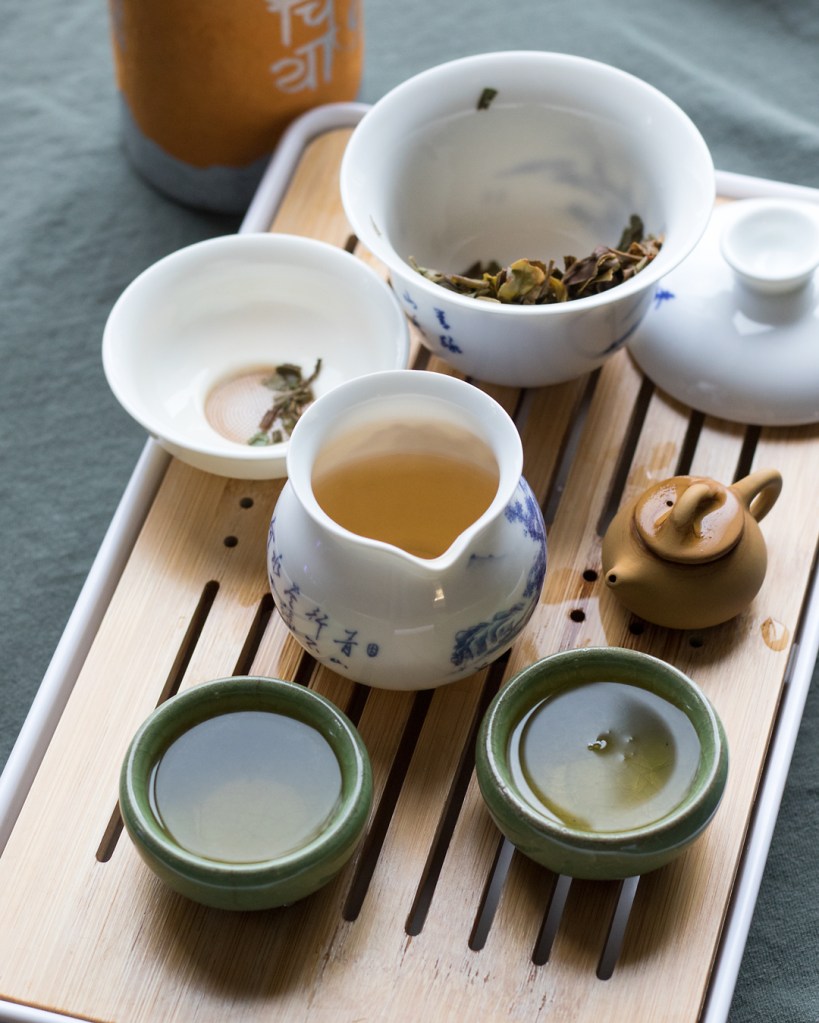
Spring Oolong is one of two teas created by Sujan Ghale, a tea maker at the Baraha Tea Factory in Ilam, Nepal. Many of the teas from the Baraha Tea Factory are sorted manually and hand-rolled, which denotes the quality they strive for in their final product. Not much information about the Spring Oolong is listed on the Nepal Tea website, and the information that is there has me slightly unsure as to whether this tea was picked and processed at Baraha, only processed, or only picked. Regardless of origin and production, the result can speak for itself.
The aroma and the appearance of the Spring Oolong puzzled me at first. Many of the leaves were broken instead of full– possibly due to transport, as the leaves were rather delicate– and the aroma was overwhelmingly floral. So floral that I was a little nervous to brew the tea. It almost smelled artificial; too sweet.
As we tea drinkers know, aroma can be deceiving.
The floral notes I’d smelled were present, but not in the uniform, overpowering way in which the aroma had suggested. Unlike jasmine teas, where the taste is singular and clear, these florals tasted more like a bouquet. I pinpointed a note of lavender among the arrangement, but the rest remained a colorful mystery. Like walking in a prairie during the spring and letting the wind waft the scents of the wildflowers, the flowery taste was a refreshing medley that never overpowered but simply complemented the more subtle notes within the tea.
One of those more subtle notes was that of wet earth. This note blended nicely with the wildflowers, the humidity and slight smell of decay and growth intermingling at the back of my tongue. It made a successful pairing for a floral tea. Sitting in my living room, sipping and looking at the snow-covered ground, I found myself with an aptly-named cup of spring in my hands. I’ve never tasted a tea that made me so quietly impatient for the coming spring.
I only managed about six steeps in the gongfu session, but that’s on me, not the tea. I sat down with a time constraint and ended earlier than I think the leaves wanted to. That said, the overall flavor didn’t evolve much past the third steep, so I’m unsure whether the tea had more to tell me. I used the same parameters for the Kumari Gold (4 grams, 5 oz of water), though this time at a cooler 175°F. Brewing per Nepal Tea’s recommendations (2 grams, 8 oz at 180°F for 3 to 4 minutes) gave me about the same result as the Kumari Gold. Fine, but not as good as when I’d gongfu’d. To each their own. If you primarily enjoy your tea when steeped in teapots, you’ll likely enjoy a light, refreshing brew when brewed by the directions given.
Brewing Recommendation: Brew right at the cusp of spring, when the days have begun to lengthen and the first hints of green and mud have reappeared on the earth. Brew too early and you’ll become impatient. Brew too late, and you’ll take it for granted. Inhale the smell of wildflowers and mud and consider new growth.
As money continues to weigh on the collective mind, finding value can be a bright spot in an otherwise grim landscape. The one deal I caved for, the one fishing line I bit, paid off. Nepal Teas has me hook, line, and sinker. They didn’t pay me for this review but, in a way, I feel like they did. For the low, low price of a dollar, their marketing tactic worked: I tried the tea. I liked the tea. I want to tell others how much I enjoyed the tea. It still feels like an uneven trade– I’m currently drinking the Kumari Gold grandpa style because it’s that good– so this review might even the scales in my conscience.
If you check their site, all of their teas are sold at a more-than-reasonable price. And, for that price, your money isn’t only going to tea production. Nepal Tea’s community-building programs, outreach, and commitment to transparency are refreshing to see in a tea company and I look forward to hearing more about their initiatives in the future.
Sometimes expanding our tea knowledge is about carefully selecting and saving for a certain vendor. Other times, it’s about taking risks for good value. I can easily say that my tiny risk on Nepal Teas paid off. May finding the best bang for our buck in a growing tea market continue. Happy steeping, friends!
 Tea Reads