As I mentioned in my post Reflecting On a Year of Tea, I’ve been learning Japanese for about a year. My accent is awful, and my handwriting is atrocious, but I make the effort regardless. Still, there’s one area I can’t practice in my day-to-day life: listening. So when a friend asked if I’d like to go to a language-practicing event in Chicago, I agreed, hoping I’d get a chance to listen in at a Japanese table.
That night, I found myself sipping a beer and speaking very poor Japanese to two infinitely patient native speakers. After a few hours, my brain was fried, and my cheeks were stained pink with equal measures of alcohol and embarrassment. One of the native speakers, perhaps taking some pity on me, switched to English and asked why I was learning Japanese. That was one thing I knew how to say: “茶が好きです.” “I like tea.” In English, I explained that I wanted to visit Japan to tour tea farms and attend a traditional tea ceremony. After a bit of discussion about tea and Japanese cuisine, he pulled out his phone and punched something into Google. He turned his phone toward me and asked if I lived anywhere near Mitsuwa Marketplace.
I looked at the location and said that, while it was a bit of a trip for me, so was Chicago. Before leaving for the night, I promised him I’d go. About a week later, I did.
Roaming the aisles, I picked out some instant ramen, spices, and snacks. My friends were over in the sushi section looking at premium cuts of fish when I turned into an aisle and froze. In front of me was an entire aisle dedicated solely to tea. Cooking matcha. $80 ceremonial matcha. Matcha bowls and whisks. Bulk bags of sencha. Tea-flavored foods and snacks. Infusers. My friends eventually found me excitedly talking to myself as I scanned all the packages, trying desperately to read them.
To avoid a massive dent in my wallet, I relegated myself to two items. One of these was a beautiful paper package covered in sakura blossoms with the kanji for tea (茶) prominently displayed. I figured it might be a sakura/sencha blend, a type of tea I’d tried a few times before from companies in Japan. When I got home and opened it, though, I was met with a surprise:
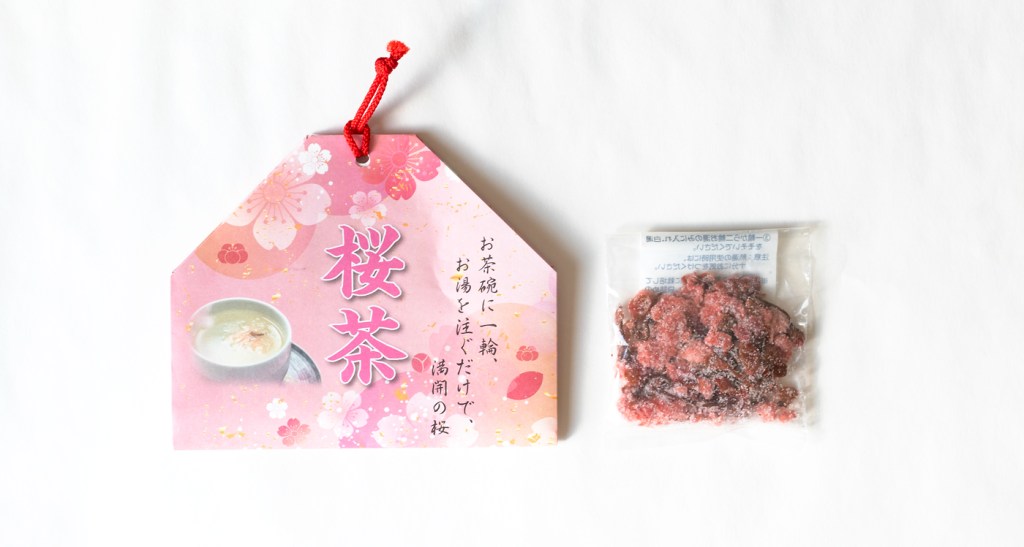
I wouldn’t call myself a tea expert, but the package certainly didn’t appear to have any tea in it. My initial guess was that it was sakura blossoms coated in some kind of sugar, maybe for a sweet herbal drink. I shrugged, folded it back up, and pushed it into my tea stash as a mystery to solve later.
Well, it’s been a few months. After sifting through my stash and trying to sip down teas I don’t plan on replacing, the mystery sakura package was back in my line of sight. To enjoy tea, you need to drink it, not store it. It took a few runs through Google Lens’s translation function, a few specific internet searches, and some experimentation, but what I’ve found is one of the most unique teas I’ve ever had the pleasure of making. Let’s talk about sakura tea.
What Is Sakura Tea?
I was right about one piece of information: the package did say “Sakura Tea”. Sakura tea, or sakuracha (桜茶), is an herbal infusion made from pickled and preserved sakura blossoms. The buds are picked between late March and mid-April when the buds are just beginning to open up but aren’t quite in full bloom. Once the buds have been collected, they’re pickled in plum vinegar for about a month and then coated in salt. This preserves the flowers, and their flavor, so that they remain intact and can be sold throughout the year. These pickled blossoms are often used for tea, but can also be found in seasonal foods and sweet treats to add a unique floral taste and appearance.
The pickling of sakura blossoms started in the Kanagawa Prefecture, sometime near the end of the Edo period (~1800 AD), and the area continues to be the highest producer of sakuracha today. Sakura tea is most often served during Japan’s famous Cherry Blossom Festivals, also called hanami (花見), or flower viewing. Outside of the festival, sakura tea is typically reserved for special occasions, particularly weddings, as the flowers are said to represent new beginnings.
How to Make Sakura Tea
Sakura tea isn’t like any other tea you may be familiar with. For one, it’s not tea. There is no Camellia sinensis involved, making this an herbal infusion, or tisane. Still, as I mentioned in a previous post (What is Tea?), I’m not here to gatekeep language. For clarity and concision, I will continue to call it tea throughout the post.
Second, it’s not a tea you can throw into a teapot, let steep, and then drink. The salt preservative and pickling process would make that one briny, bitter brew. Instead, follow these steps to get the most out of your experience with sakura tea:
Step One: Pick Your Sakura Blossoms

Sakura tea isn’t brewed in a teapot or a gaiwan; it’s brewed inside your cup. The size of your cup will dictate how many blossoms you’ll need to get a flavorful brew. For a small teacup or a gongfu cup, you’ll only need one blossom. For a larger mug or glass, you’ll need at least two. Don’t put them in your drinking cup yet– pick out your preferred blossom(s) and set them to the side.
Step Two: Soak the Blossoms
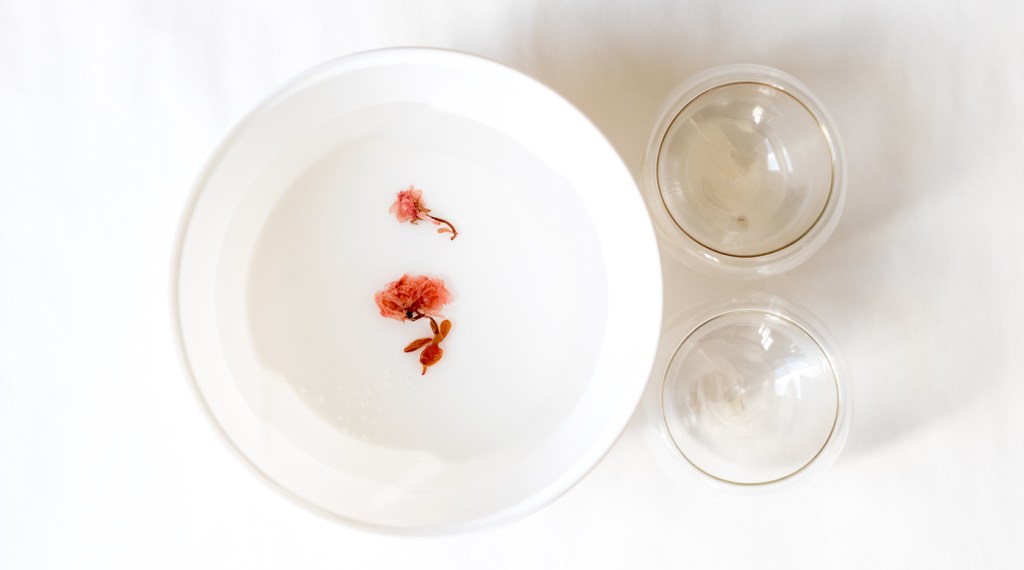
As I said earlier, if you try to steep this tea as-is, all the preserving salt will dissolve into the water, which doesn’t make for a tasty cup. To mitigate some of the saltiness, grab a separate, shallow bowl and fill it with lukewarm water. Place your sakura blossoms in the bowl and allow them to sit for three to five minutes. I recommend letting large, compact blossoms soak for longer, as more salt ends up trapped within the petals. You can lightly agitate the water to try and remove more of the salt, but fair warning: the blossoms are fragile.
Step Three: Steep Your Sakura
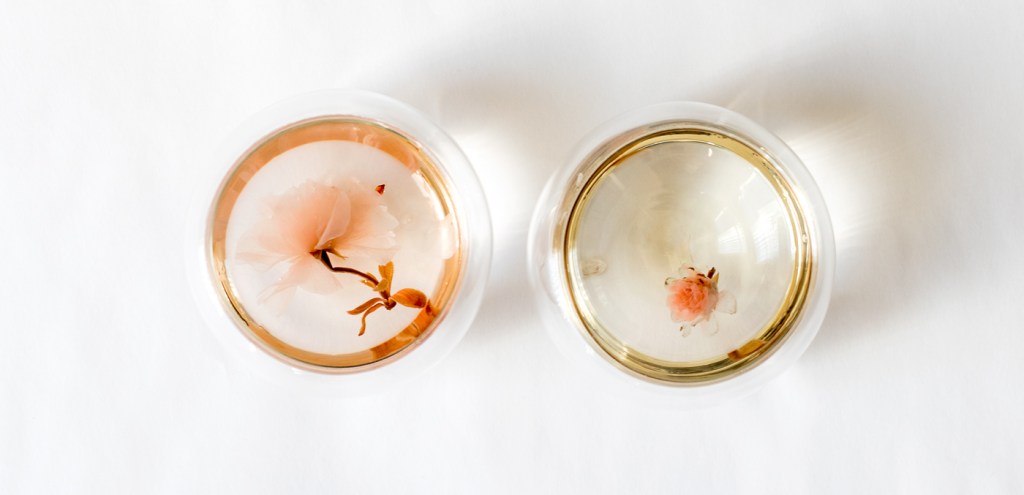
Once the three to five minutes have passed, move the sakura blossom over to your drinking cup. Slowly pour boiling, or just-off boiling, water into the cup. Let the sakura blossom sit and steep. Eventually, the blossom will unfurl and float to the top. This is your sign that the tea is ready to drink!
Step Four: Enjoy!
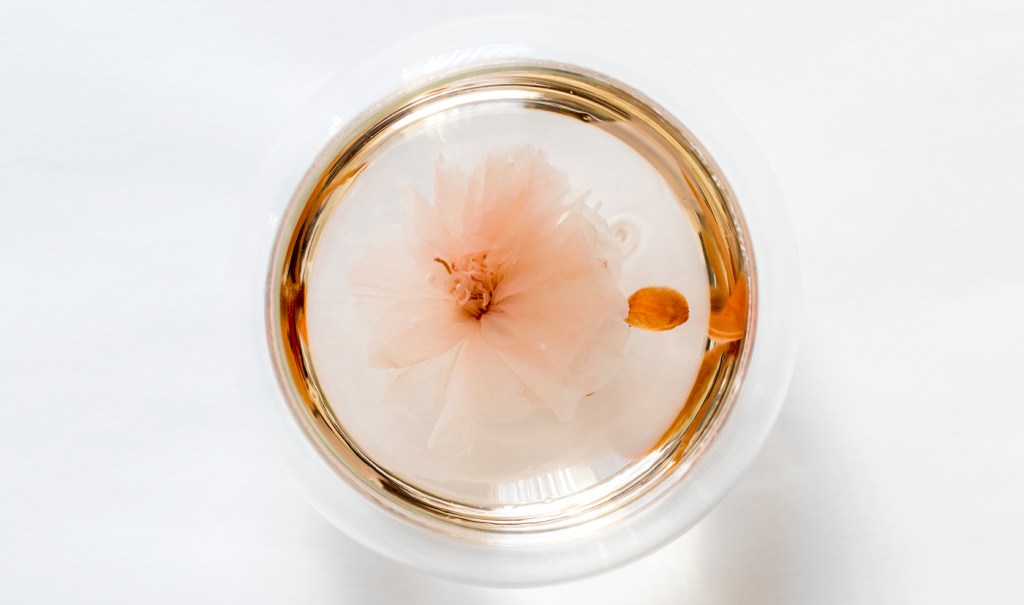
Take your first sip of sakura tea and enjoy! You should taste the light floral of the sakura on the top of your tongue, along with a darker undercurrent of savory plum. This undertone is thanks to the plum vinegar processing and the leftover salt that hasn’t quite dissolved from the petals. If you’re not getting these notes, take a spoon and add a little of the washing bowl water to your cup to taste. The washing bowl water will be very strong, so add in small increments to avoid overpowering your tea.
If you’d like to enjoy your sakura tea iced, allow your tea to cool to room temperature before adding ice to your glass. Or, if you’re feeling patient, let the glass and water cool to room temperature and then place in the fridge for an hour or two. Be sure the water isn’t too hot before using this method, or your glass can break due to thermal shock.
This adventure into a Japanese herbal tea was humbling. Even after a year of learning everything I could get my hands on about tea, I’ve never encountered anything like sakura tea’s preparation or taste. While the mass-produced sakura tea I bought at the grocery store may not have been the best first experience with the infusion, it’s piqued my interest enough to keep an eye out for it in the future. And, if I ever make it to Japan for hanami, I would love to experience this tea in its freshest form. I look forward to that day– and the day I go back to the language meetup and tell my newfound friends about my journey into sakura tea.
 Tea Reads