Like many Americans my age, one of my first introductions to tea was the Starbucks chai latte. Before that, I’d only ever begrudgingly drank Lipton iced tea and the occasional Earl Grey or Irish Breakfast tea bags I’d find scattered in the kitchen cabinets. After such a shaky start with tea, the Starbucks chai latte opened my eyes to a whole new world of creamy, sugar-filled drinks. I figured, with tea drinks this good, maybe tea wasn’t all bad.
For years the drink at Starbucks was my single reference point for chai. I’d had a few chai-like black tea blends, and I’d tried chai at a few other local coffee chains, but most of them tasted similar to the Starbucks chai. At the same time, I was discovering that loose-leaf, single-origin teas had different terroirs and that even if something said “Dragonwell”, it didn’t mean it’d taste the same as Dragonwell from another vendor. Each tea farm, each processing plant, was unique and would give a slightly different flavor. It didn’t click that this included chai until I eloped.
Spending a week and a half traveling through the Pacific Northwest, my partner and I stopped for coffee or tea every morning. Sometimes I got lucky, and there was a dedicated tea shop on our route. Most of the time? I was stuck at a coffee shop ordering one of their two or three tea drinks off the menu. I don’t bother much with matcha lattes at coffee shops (they are rarely good), so I was left ordering chai almost the entire trip.
First: I don’t recommend this. I was sick of chai by day five and thought I was going to die of sugar poisoning. Second: I discovered that, like single-origin tea, every shop made chai differently. A lot of it was from concentrate, a hallmark of coffee shops everywhere, but each shop chose to add its own twist on what they thought chai should be. One shop would have more cinnamon. Another, more ginger. I had one practically filled with nutmeg. None of them were bad– just different from my limited Starbucks experience.
It wasn’t until I returned from my elopement that I accidentally stumbled across a tea shop that made masala chai from scratch. On my continued hunt for tea shops, I came across a local tea room called Assamica Teas. After a few visits where I’d sampled some of their loose leaf selection, I finally caved and ordered the masala chai. It blew my mind.
Starbucks and coffee shop chai don’t even come close.
Trying real masala chai pretty much ruined chain-store chai for me. I’ll admit, I’m much more of a loose-leaf tea drinker anyway, so losing Starbucks chai has, if anything, just saved me money. But, as someone who aims to be a lifelong tea adventurer, I figured it was time to attempt making chai from home. What I discovered in the process has made me appreciate how little I truly know about this delicious drink.
The History of Chai
As we discussed in What Is Tea?, there were two main ways that the word “tea” traveled: by sea and the Silk Road. When tea traveled by sea, it ended up as the word “tea”. When it traveled by the Silk Road, it instead turned into variations of the Chinese word cha, like “chai”. That said, even as traders passed through modern-day India with their cha, the original spiced drink had already been drunk by nobles and statesmen for many, many years.
Originally a drink meant to promote health and alertness, the original chai consisted of boiled spices and milk. There was no tea involved at all. It wasn’t until the 1800s when British colonists discovered the wild assamica variety of the camellia sinensis plant, that tea was introduced as a commodity to the Indian markets. Most of the tea was exported, which made buying tea locally expensive, but growing British colonization efforts began to force tea culture onto India. Whether it was to make tea leaves last longer or to stick a giant middle finger to the colonizers, tea was added to the traditional spiced milk drink in local markets. After India won its independence from Britain and the development of the CTC method (crush, tear, curl) in the 60s, tea became cheaper and more accessible to the wider population. The spiced tea drink, now called masala chai, took off.
Here’s where it gets messy: for centuries this spiced drink was made differently between regions of India, between cities, and even between families. There has never been a single recipe, a single ratio of spices, that is “traditional” chai. This can make it hard for those of us who didn’t grow up with homemade chai to figure out where to begin.
Making Masala Chai at Home
If you type “how to make masala chai” into a search engine, you’ll likely end up with a million and a half results. None of them is the “right” way to make chai because it doesn’t exist. That said, there are some basic tenants that all chai adheres to.
Masala chai (spiced tea) consists of three main components: a mixture of spices, black tea, and milk. In India, water buffalo milk is preferred, but here in the States, you can substitute it with whole milk or your favorite milk substitute. The tea can be any black tea you prefer, though it’s best to stick with unflavored Darjeeling or breakfast blends. The spices? That’s where it gets tricky.
Most of the flavor in a cup of chai comes from the spice blend. These blends often include spices such as cinnamon, cardamom, ginger, peppercorn, fennel, nutmeg, star anise, and cloves. Each blend is made with the preference of the drinker, or their customers, in mind. Much like how all those coffee shops in the Pacific Northwest added or subtracted ingredients to cater to their local market, everyone’s homemade chai will differ based on what they think tastes the best.
After some experimentation, I’ve settled on a personal blend for my own homemade chai. I’ll share all the ingredients you’ll need, as well as the instructions on how I brew it, below. Keep in mind: results will vary. Use this recipe as a jumping-off point for your experiments into homemade masala chai:
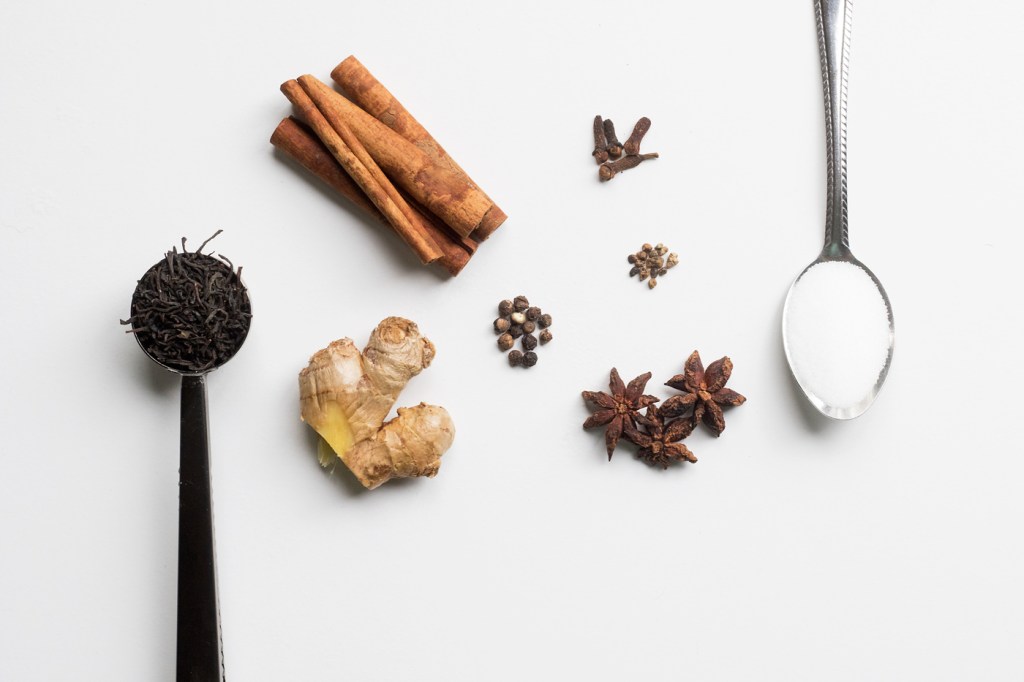
Ingredients (Makes Approximately 2 Cups of Chai):
- 2 Cardamom Pods
- 1 Clove
- 1-Inch Knob of Ginger, Sliced
- 8-10 Whole Peppercorns
- 1 Cinnamon Stick
- 1 Star Anise
- 2 Teaspoons of Loose Leaf Black Tea or 2 Tea Bags
- 2 Cups of Water
- 1 Cup of Whole Milk or Milk Substitute
- 2 Teaspoons of Sugar, or To Taste
Step One: Grind Your Spices
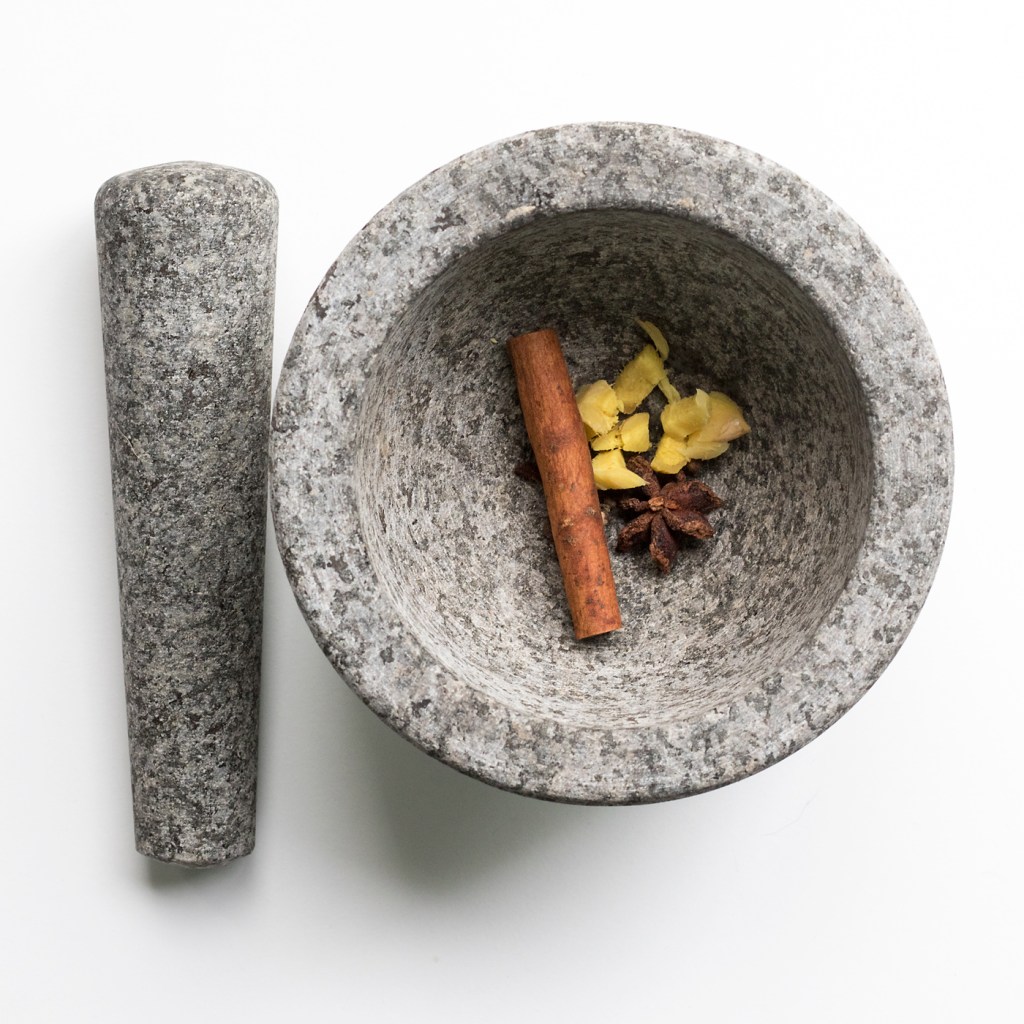
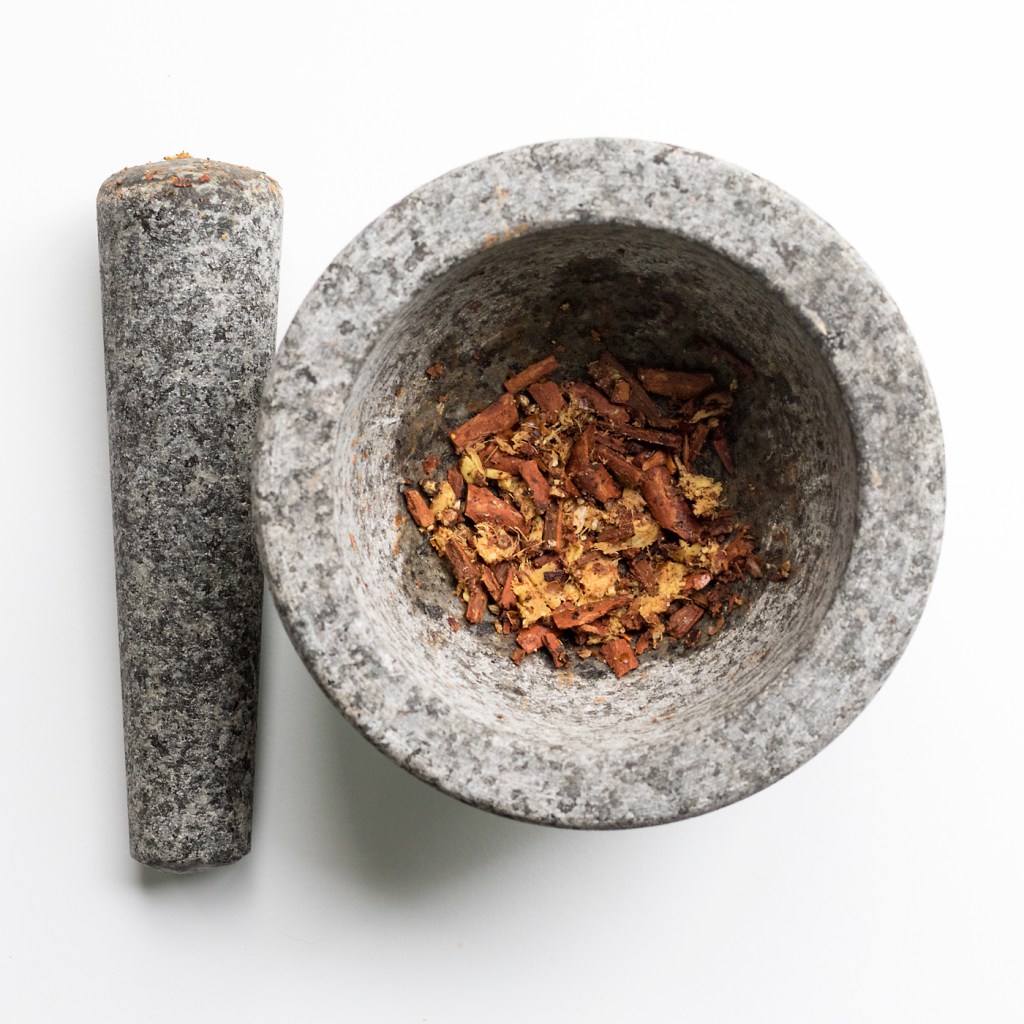
For the best-tasting masala chai, it’s recommended to start with whole spices. I also highly recommend a mortar and pestle for grinding– it ensures all the oils that are released make it into your chai. If some of the whole spices aren’t attainable, replace them with an equivalent amount of powdered/pre-cut spices. No mortar and pestle? A food processor or the flat part of a large knife can work just as well. At the end of whatever process you choose, you should have the cardamom pods, the clove, the ginger, the cinnamon, the star anise, and the peppercorn ground into powder or small chunks.
Step Two: Boil the Spices
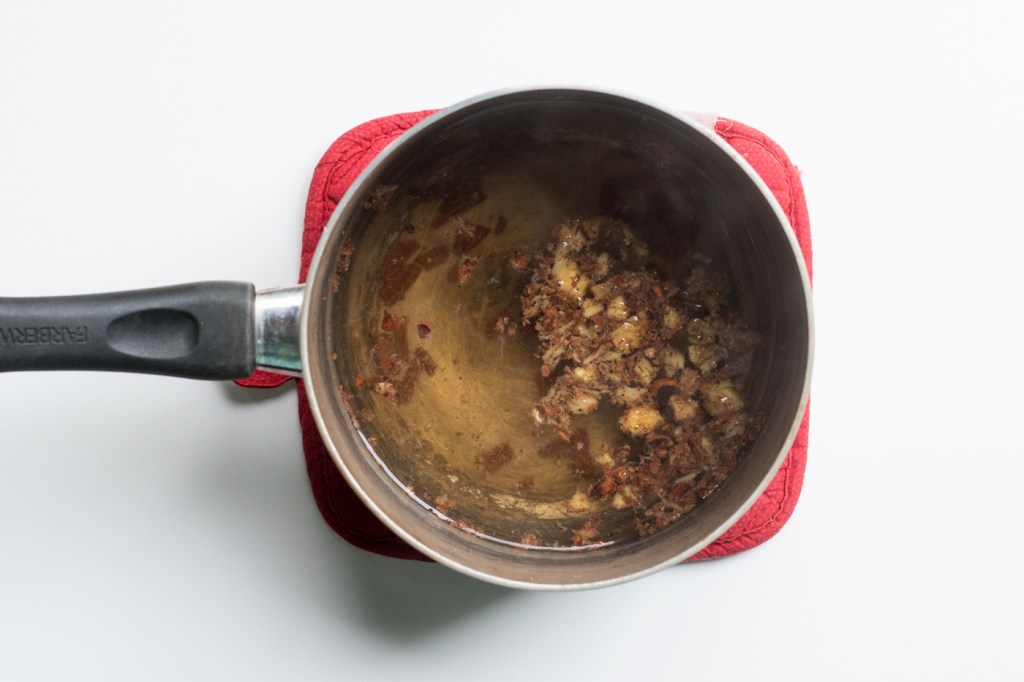
Add two cups of water to a saucepan and dump in your spice mixture. Bring the water up to a boil using medium-high heat.
Step Three: Add Tea & Steep

While the water is still boiling, add your two tea bags or two teaspoons of loose-leaf tea. Turn the heat down to medium or medium-low to keep an active simmer going. Allow the tea to steep for two to three minutes.
Step Four: Add Milk
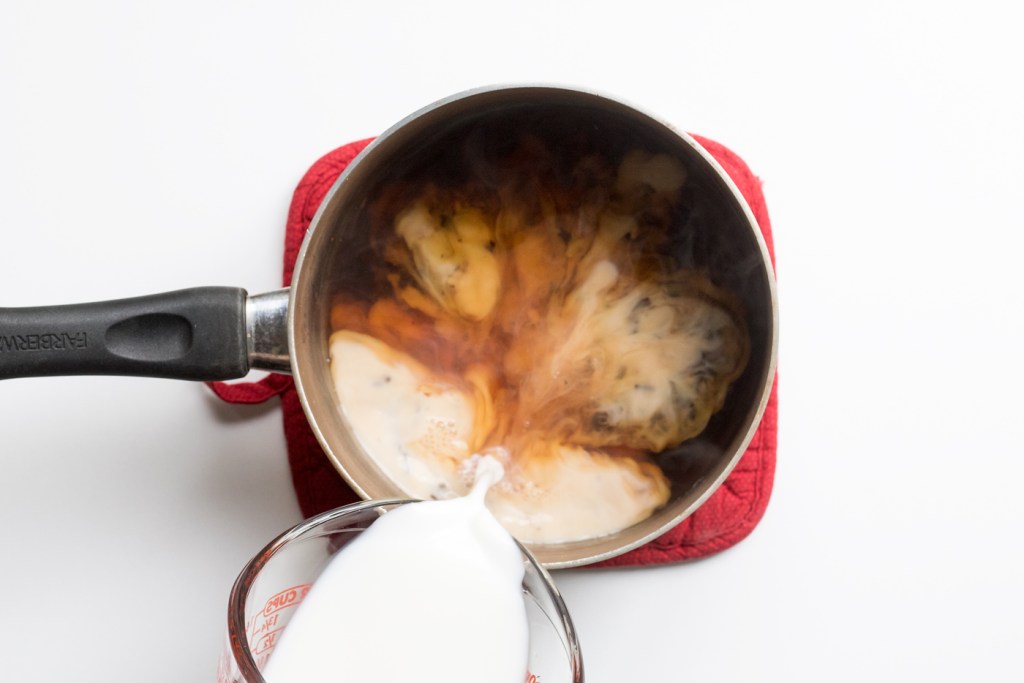
Pour in one cup of whole milk or your milk substitute. It’s important not to do this too soon in the process, as the enzymes in fresh ginger can curdle milk.
Step Five: Aerate
One of the most important parts of getting a silky, frothy chai is to aerate it. There are two main methods of aerating chai at home: the pull or the double boil.
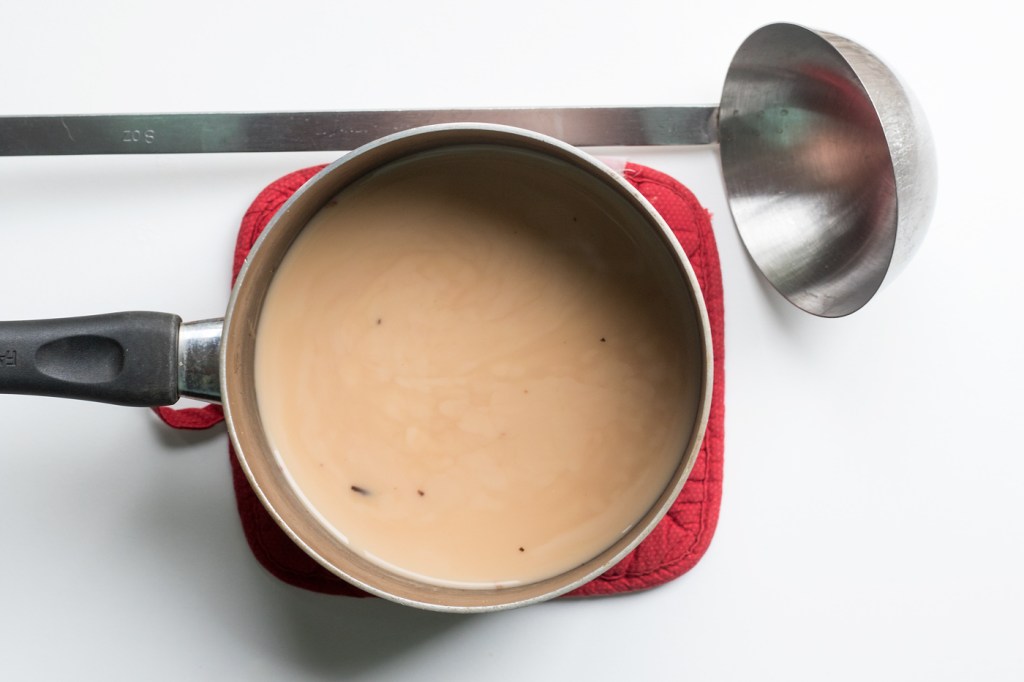
The Pull: “Pulling” chai is the way you typically see chai aerated in Indian tea shops and marketplaces. Using a ladle, scoop some of the chai out of the saucepan. Raise the ladle as far as you feel comfortable and then pour it back into the pan (I don’t have a specific height– use your judgment and willingness to clean up the potential splatter). Do this several times. Another way would be to pour the chai back and forth between two pans, but this method can get messy, fast.
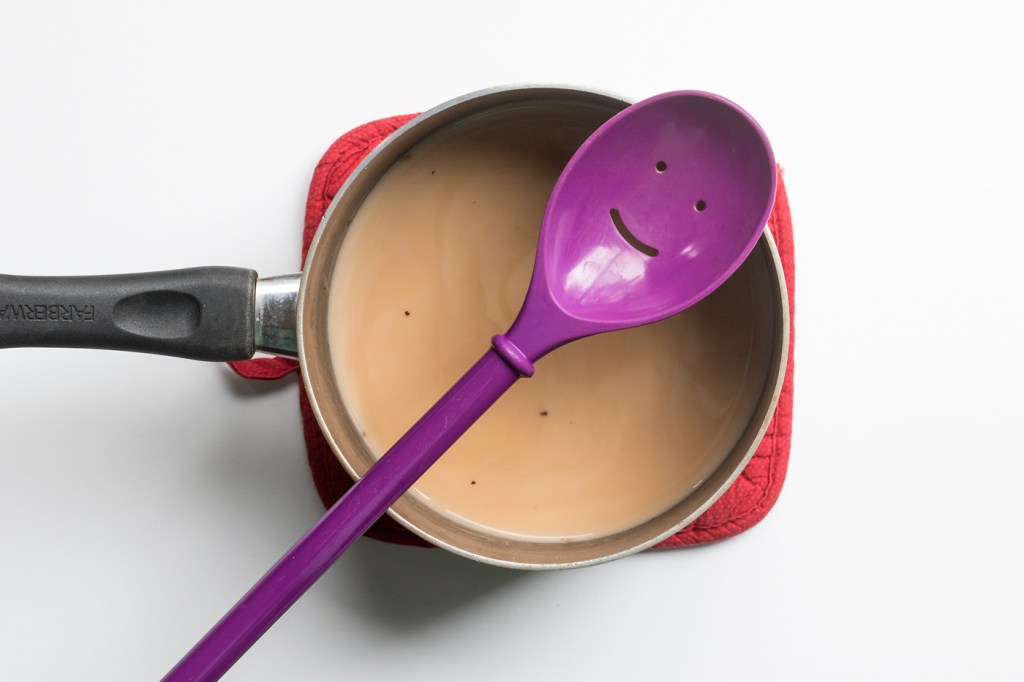
The Double Boil: This is the method I prefer. Turn up the heat to bring your chai back up to a boil. Once the bubbles begin to hit the top edge of the pan, remove the chai from the heat. Allow the bubbles to settle down, and then put the pan back on the heat. Let the chai boil again to the same height and pull off again.
Step Six: Simmer

Once you’ve aerated the chai, turn down the heat and let it simmer for another five to seven minutes. This step reduces the chai, making it thicker and creamier.
Step Seven: Strain & Enjoy

Remove your chai from the heat. Place a strainer over your preferred pouring vessel or mug and pour your chai. The strainer will catch most of the spices and the tea/teabags left inside the mixture. The result in your cup should be a creamy, delightful chai. Add sugar to taste and sprinkle some fresh nutmeg or cinnamon on top for a little added flavor.
I am positive that someone, somewhere is reading this recipe and cringing. But that’s the beauty of chai– it’s incredibly flexible. There is no one “true” way to make chai, just as there is no “true” sencha, no “true” Longjing, no “true” Earl Grey. Every tea, everywhere, is influenced by its surroundings and the people who make it.
The exception? Starbucks. So, take my advice: ditch the coffee-chain chai. A good chai is worth the effort you put into it.
Until next time, happy reading and happy sipping!
 Tea Reads