Your body’s sense of balance relies on several complex systems. Most of these systems, like your inner ear and the nerves in your core, are reflexive, requiring no active thought. The main exception (for most) is visual stimulus. Our eyes are often the first to detect and decipher a loss of balance in a conscious way, usually with some variation of, “Oh, shit,” as the floor comes up to meet our face. That’s why, when teaching balancing poses, many yoga instructors tell students to focus their gaze on a singular point. This focus point helps you detect minute changes in position, allowing you to adjust your stance or muscle involvement to avoid falling on your ass.
When I wrote about finding balance at the beginning of the year, I hadn’t quite found my focus point. Though I desperately wanted to, I hadn’t fully committed to anchoring my year around my creative work. I think, in some limbic corner of my brain, I knew my year wasn’t going to turn out the way I’d imagined. Sure enough, within the first two months of 2025, I found myself booked solid with doctor’s appointments, medical tests, and specialist visits. I was forced to shift my year’s focus to my health.
I don’t want to worry anyone unnecessarily, so let me stress: I’m fine. Actually, I’m better than fine, thanks to several wonderful providers. But pivoting my focus meant I had to set my creative goals to the side.
That’s not to say I didn’t nurture my creativity at all. Quite the opposite! I suddenly found myself with copious amounts of downtime, which I spent working on fabric arts, reading, and noodling around on Scrivener (nothing publishable, mostly self-indulgent silliness). While I was disappointed I didn’t have the time or energy for my original goals, it’s important to remember that this, too, is a form of balance. It just wasn’t the balance I’d expected when I wrote my first post of the year.
As 2025 draws to a close, though, I find myself with more room to breathe. And, if I’m honest, a backlog of blog ideas I’d like to implement in 2026. I’m firmly committed to making my creative goals my anchor for the new year, and I hope you’ll join me!
To wrap up this little update, I thought I’d end with some mini reflections for my favorite reads of 2025. Until next time, happy reading, happy sipping, and a very happy new year!
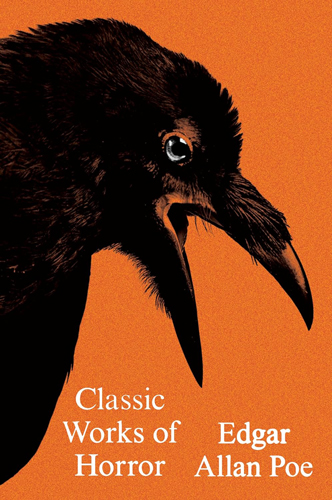
Classic Works of Horror, Edgar Allen Poe
I fell in love with Edgar Allen Poe’s “The Fall of the House of Usher” when I was 13, but I’d never explored his work in full. So, when I saw this collection at my local used bookstore, I nabbed it. Although the book claims to be Classic Works of Horror, it actually contains several genres, including everything from one of America’s first detective stories to a hilarious comedy titled “Some Words With a Mummy.” I highly recommend this collection, if only to expand your idea of what “horror” can be.
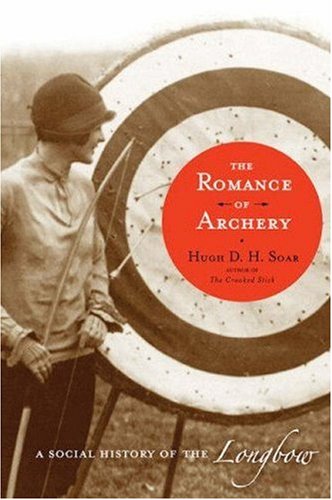
The Romance of Archery: A Social History of the Longbow, Hugh D. H. Soar
During the 2024 holiday season, I found myself in possession of a traditional longbow. Since I couldn’t start shooting until spring, I decided to feed my excitement by reading The Romance of Archery, a deep dive into how the longbow went from a weapon of war to a leisure instrument of Britain’s upper crust. It’s incredibly dry and likely not written for the layman, but if you’re willing to skim sections about score-keeping and bow measurements, it makes for a fascinating read.
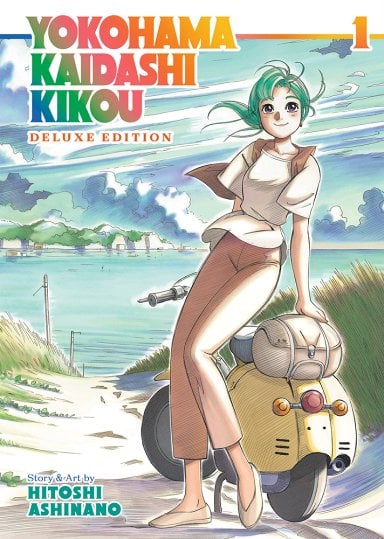
Yokohama Kaidashi Kikou, Hitoshi Ashinano
Putting Yokohama Kaidashi Kikou (also known as Yokohama Shopping Trip) on this list feels a little like cheating, but I can’t let the year go by without recommending this award-winning sci-fi manga. I originally read the series on a scanlation site in the early 2010s, a type of website that posted amateur translations of manga not available in the U.S. An official English translation was only just published in 2024, and this release allowed me to experience the magic of Alpha’s soft-apocalyptic coffee shop with all its nuance intact. Cozy, slow, and bursting with beautiful art, Yokohama Kaidashi Kikou is a delight from start to finish.
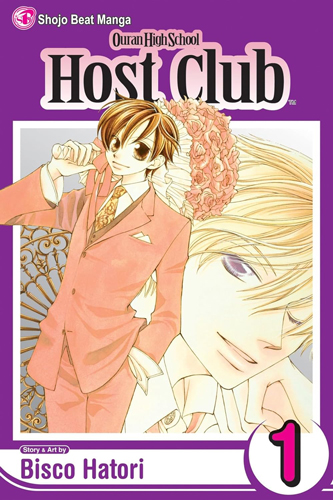
Ouran High School Host Club, Bisco Hatori
Ouran High School Host Club feels like comfort food. Another re-read from my high school days, this romantic comedy series follows scholarship student Haruhi as she goes into serious debt with some of the most ridiculous students the prestigious Ouran Academy has to offer. It combines laugh-out-loud antics with sincere storytelling and covers everything from Japan’s class stratification to gender presentation. It’s definitely not for everyone—on a scale of 1 to 10 of complete manga nonsense, it’s a solid 5—but for someone in the right mood with the right taste, Ouran High School Host Club can feel like being wrapped in a warm, fuzzy blanket of friendship.
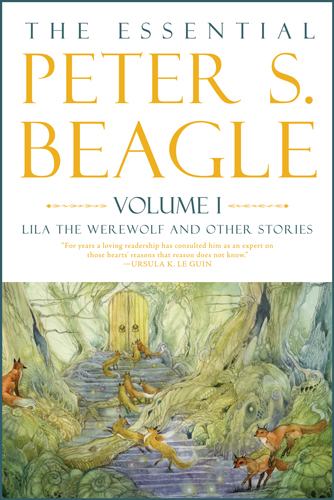
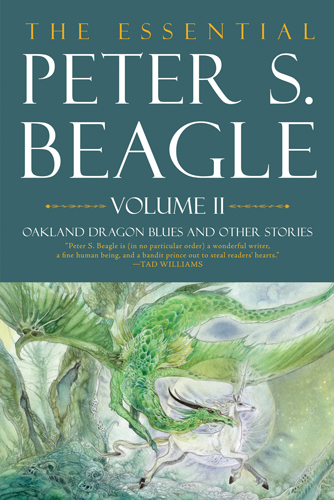
The Essential Peter S. Beagle, Volumes 1 & 2, Peter S. Beagle
While visiting my local bookstore, I spied these gently used collections on a high shelf. I had to stand on my tiptoes to grab them and, as I read the back, I heard someone trying to get my attention.
“Hey, sorry to bother you,” the person said, “But have you read those books?”
“No, I was just looking at the beautiful cover art. I love The Last Unicorn, though.”
“Okay,” the person said, a smile on their face, “If you like The Last Unicorn, you should buy those. They’re just as life-changing. Maybe more.”
I laughed and told them they’d convinced me. I’d never met someone so passionate about an author’s short stories. But, after reading them, I get it. If I saw someone considering these books, I’d do the same thing.
(Which I’m doing now. Go read these. Peter Beagle is a treasure.)
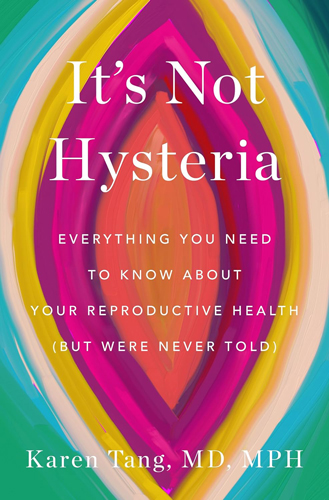
It’s Not Hysteria: Everything You Need to Know About Your Reproductive Health (But Were Never Told), Dr. Karen Tang
Speaking of unicorns, I found my own unicorn in the OBGYN office this year. After years of having my symptoms dismissed, I found a doctor who not only listened but also recommended Dr. Karen Tang’s It’s Not Hysteria so I could learn more about my diagnosis. Although It’s Not Hysteria is more of a reference guide than a narrative non-fiction book, I still found it to be one of the most illuminating reading experiences of the year. Equal parts validating and infuriating, the book covers common issues with vaginal reproductive systems, their potential causes, and available treatments. Whether you’re someone who wants to figure out why your body Does That or someone who wants to understand a loved one’s struggles, It’s Not Hysteria is the perfect layman’s guide to vaginal reproductive health.
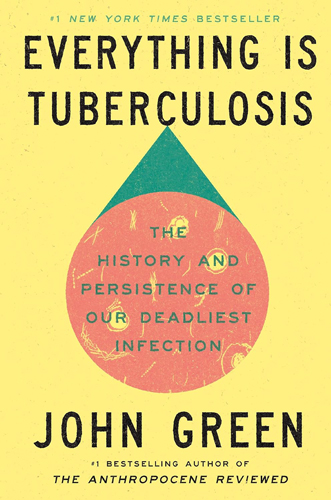
Everything is Tuberculosis, John Green
Although John Green is best known for his fiction, I’ve found his recent forays into non-fiction infinitely more interesting. His newest book, Everything is Tuberculosis, dives into the history, mechanisms, and current status of the aforementioned disease, using Henry, a TB patient in Sierra Leone, as a narrative through-line. It’s a quick, informative read that refuses to succumb to pessimism, instead ending with a promise that a world without TB is possible.
 Tea Reads